Aspen: three things we could post
Every line in here is something you actually said on that stage. Three ways in, each with the post, the video, and four different ways to handle the picture. The posts do not retell the videos: if the clip is attached, the caption is for the part that is not on the tape.
Option 1
Nobody knows
Katie asks what AI does to work, he says nobody knows, and gets her to admit she does not know either. The post never reads as a brag because it is an admission.
The post
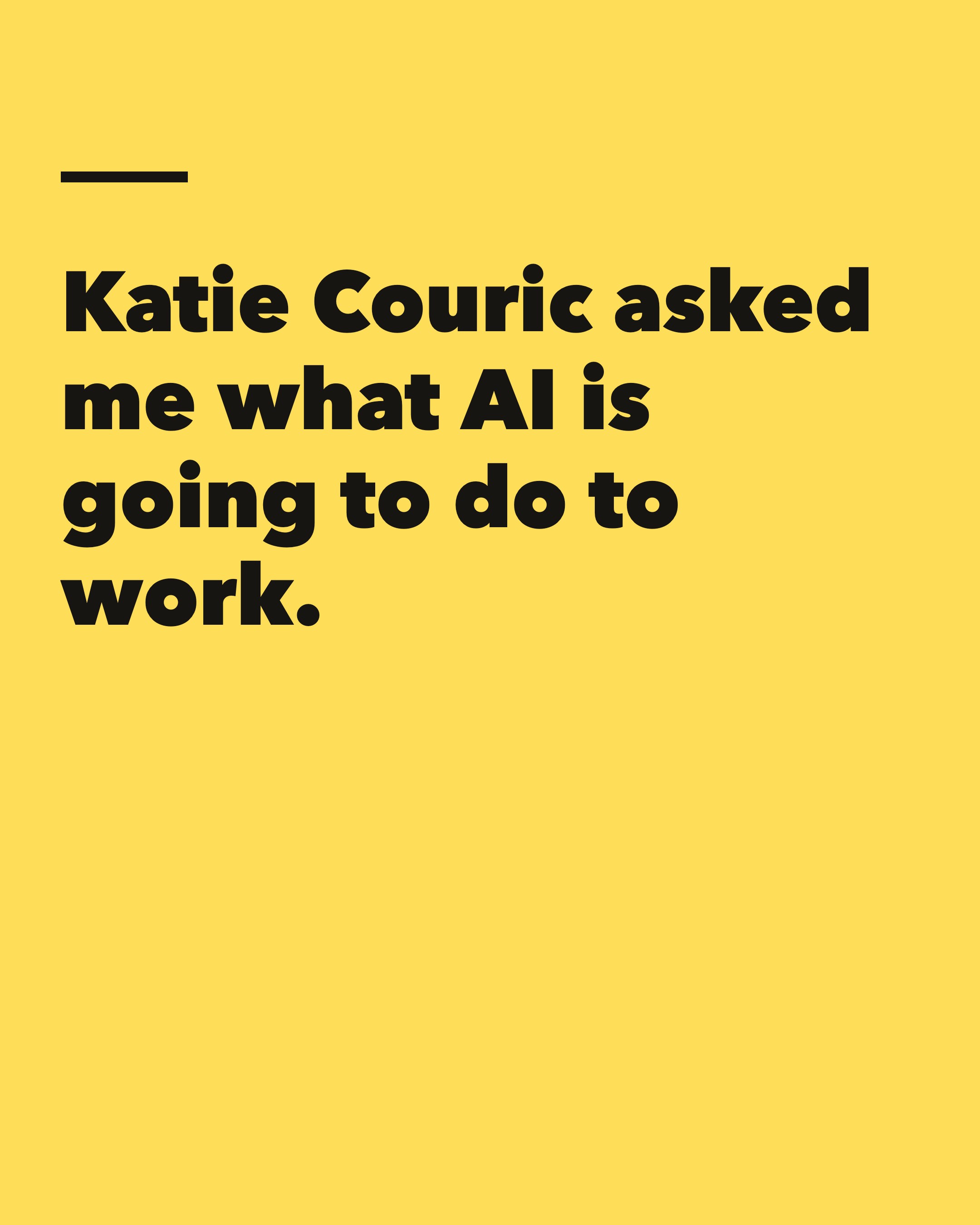
Katie Couric asked me what AI is going to do to work, and I said I don't know.
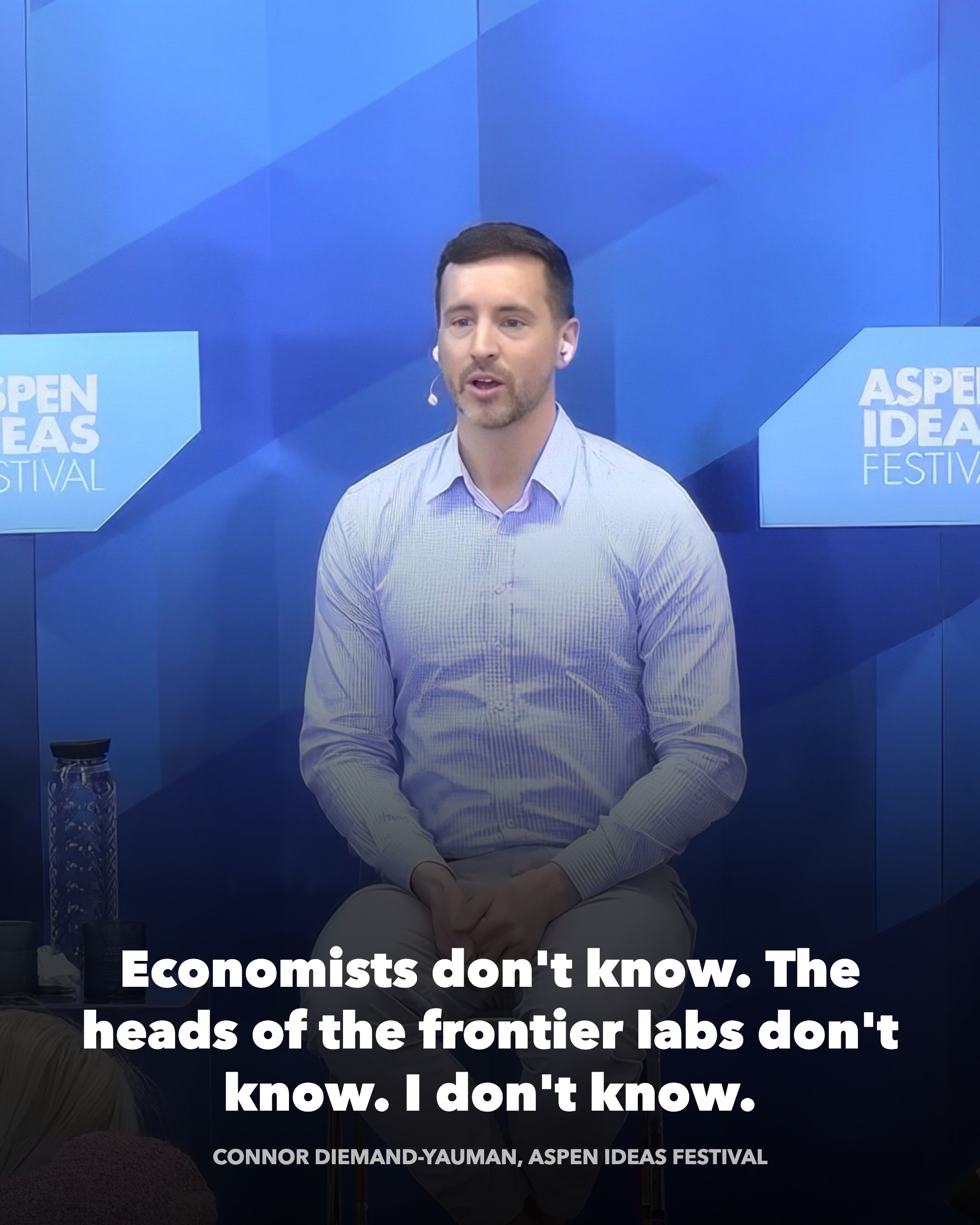
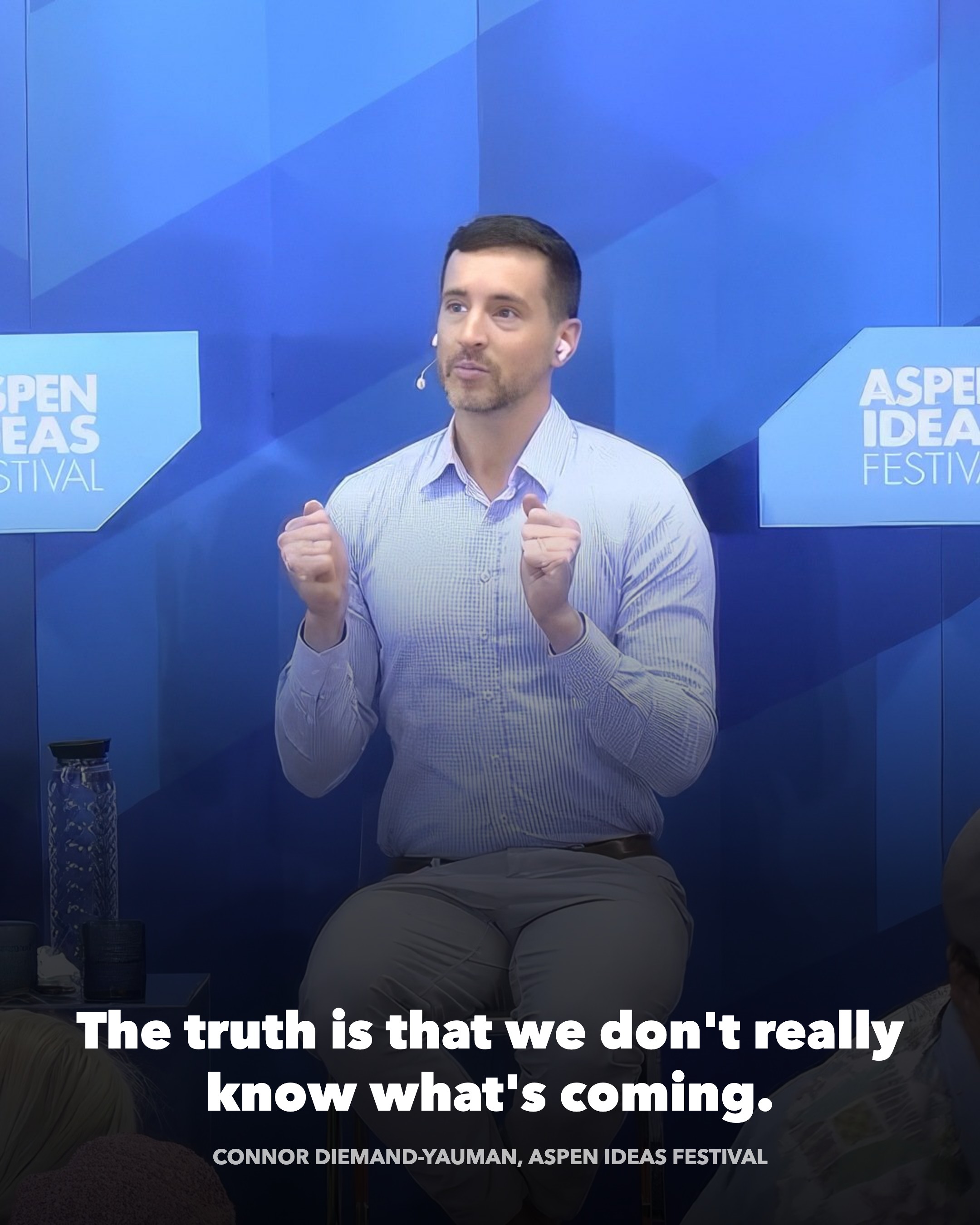
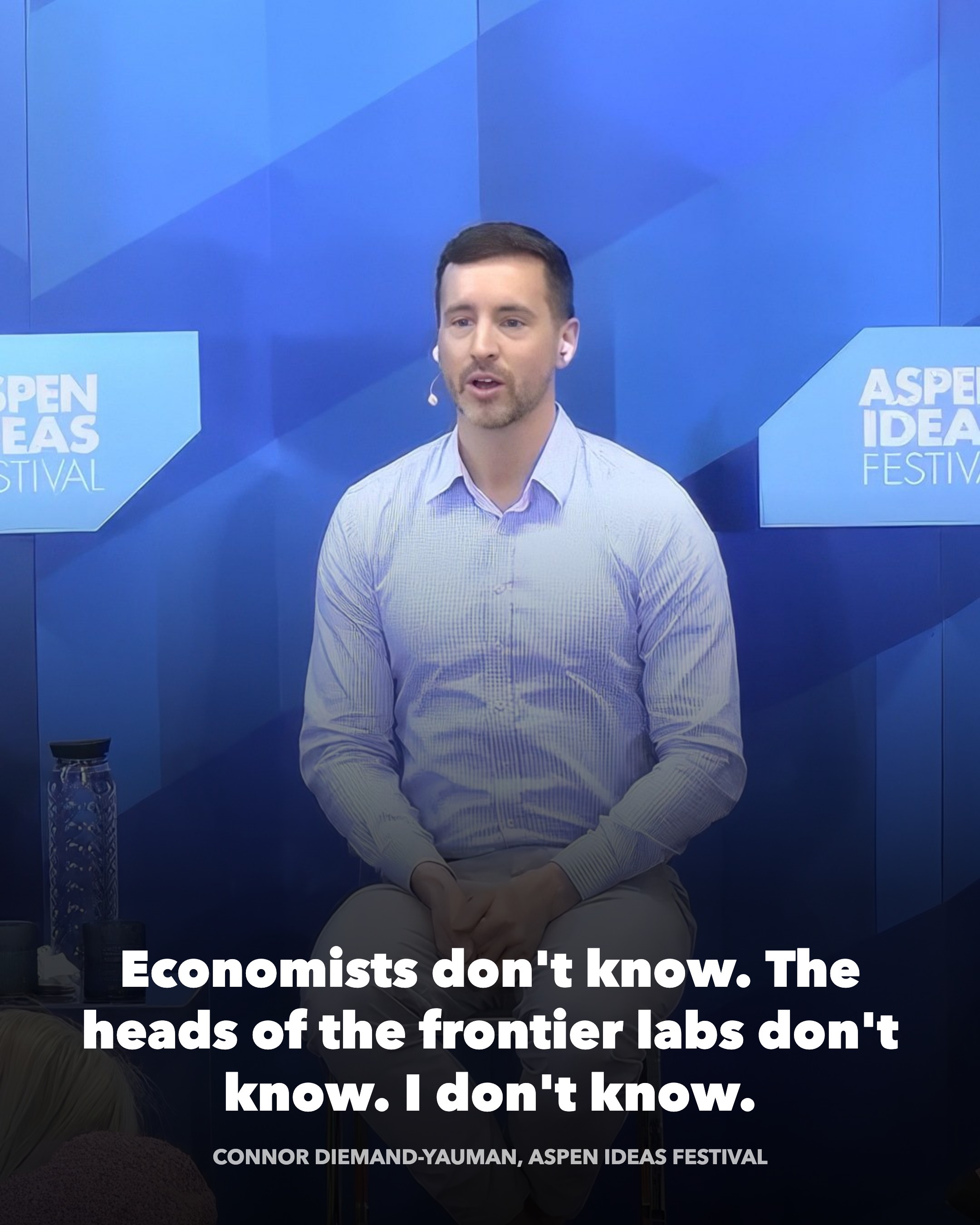
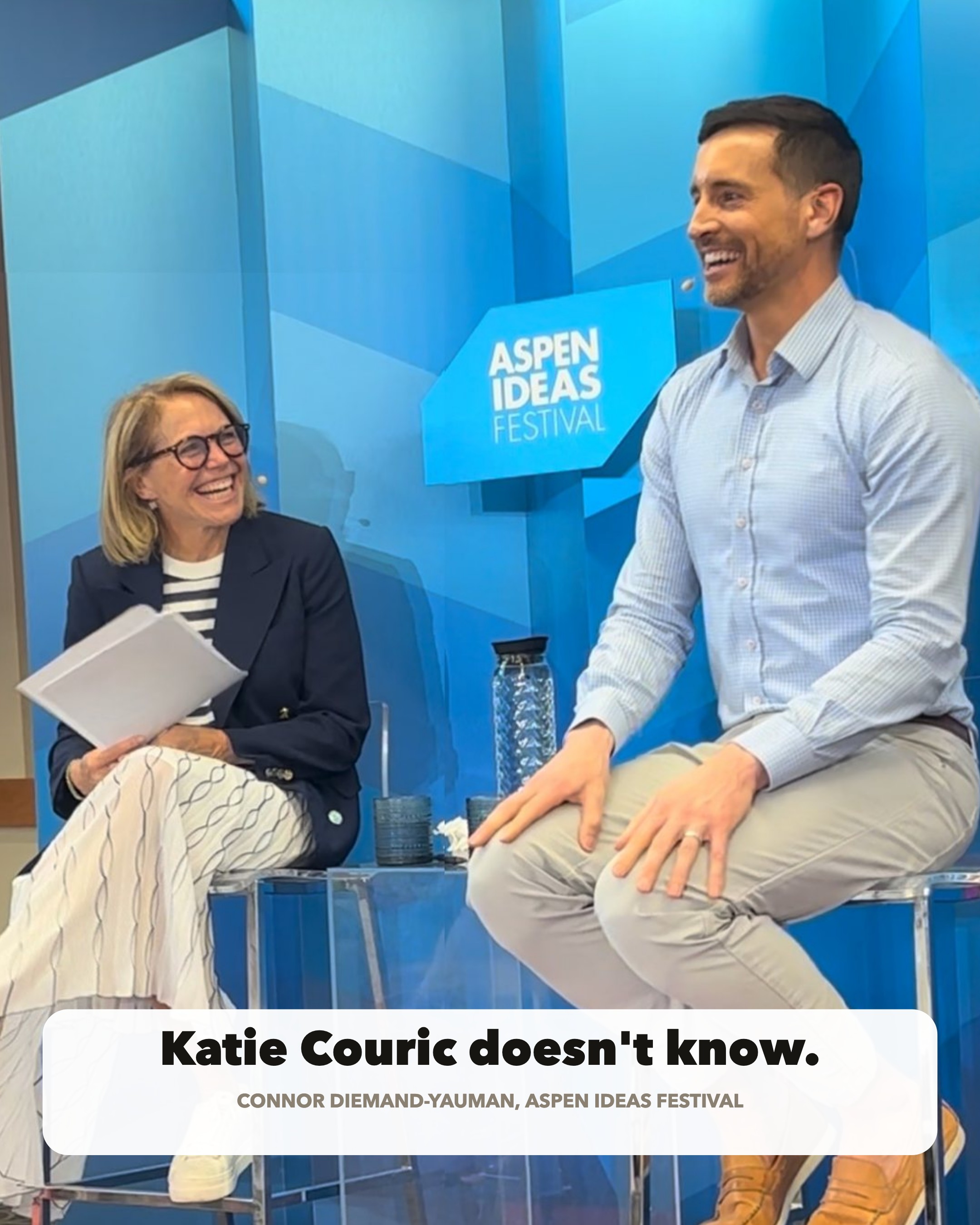
Nobody does. Economists don't. The heads of the frontier labs don't. I asked her and she didn't either.
That sounds like a dodge until you try to build something on top of it.
If you can't say which jobs survive, you can't design a four-year degree around the jobs that survive. So we stopped trying. Our programs run in months instead of years, and people can come back and do another one when their work changes again. That isn't hedging. It's the only honest design when the forecast is worthless.
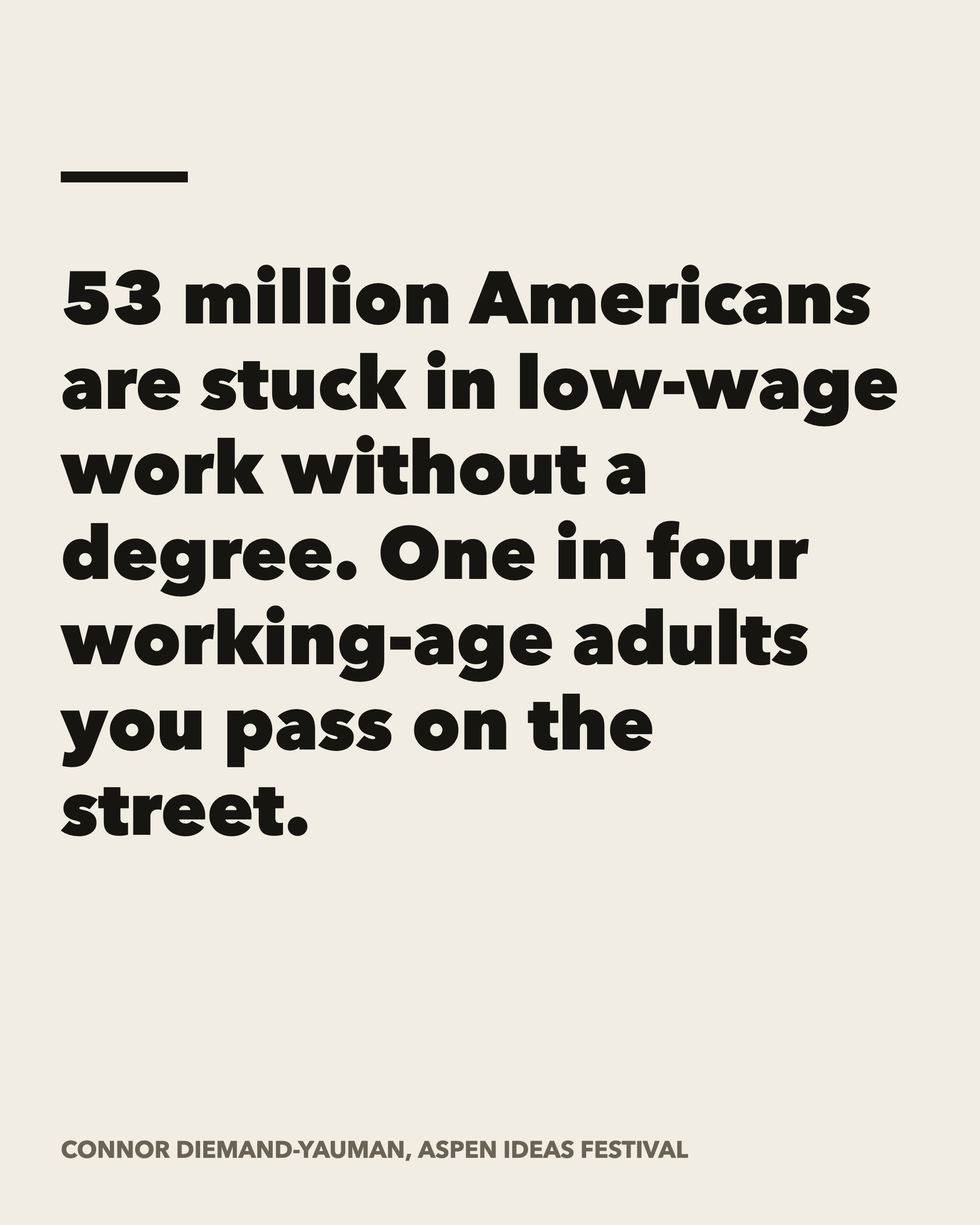
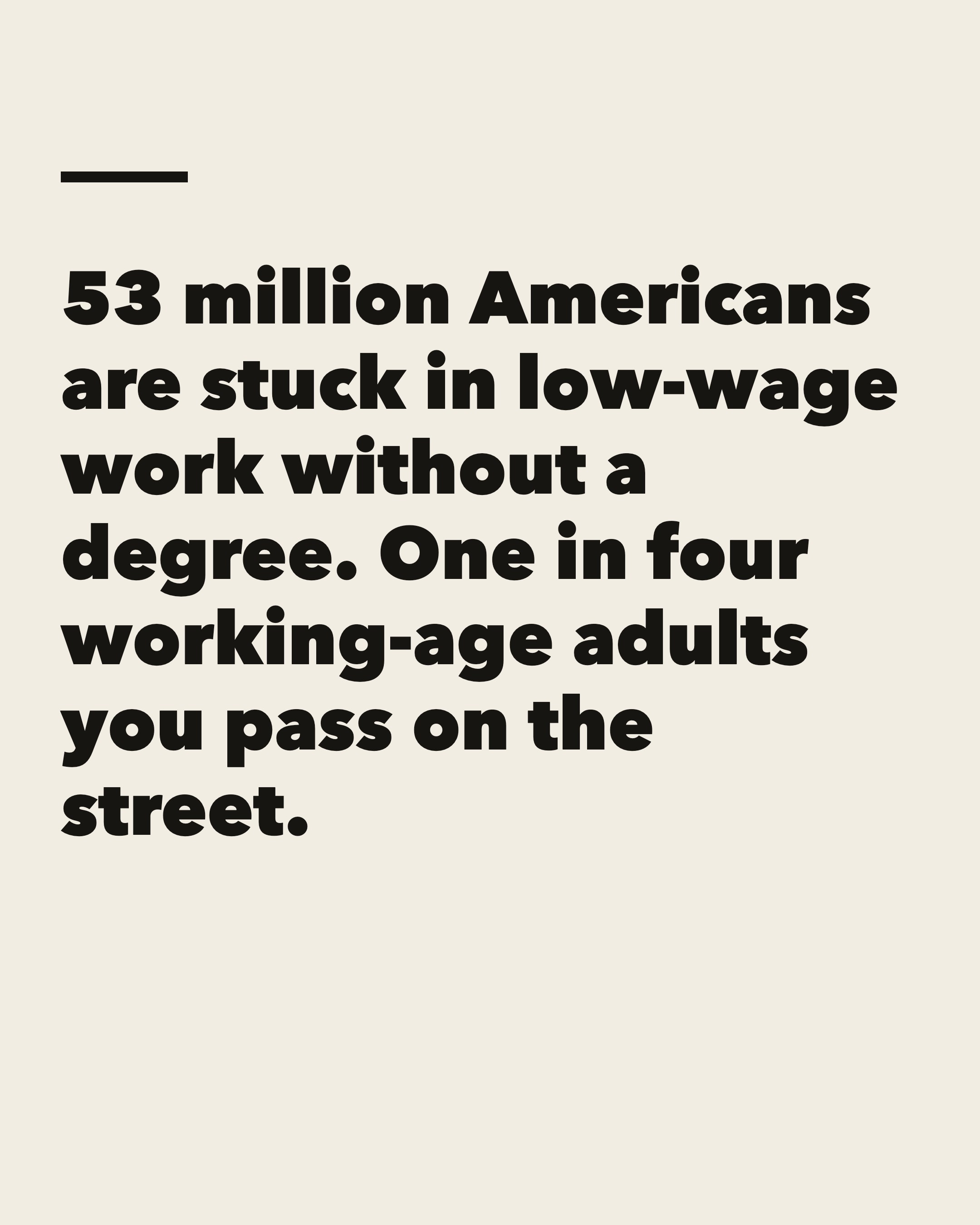
The other thing you can build on is that whatever comes hits the people with the least cushion first. Less savings, fewer credentials, no network to fall back on. That's 53 million Americans in low-wage work without a degree, one in four working-age adults you pass on the street.
I don't know what's coming. I know who it lands on hardest, and you can build for that.
The video
Ways to do the picture
No type at all. The caption carries the words, which is what most people post.
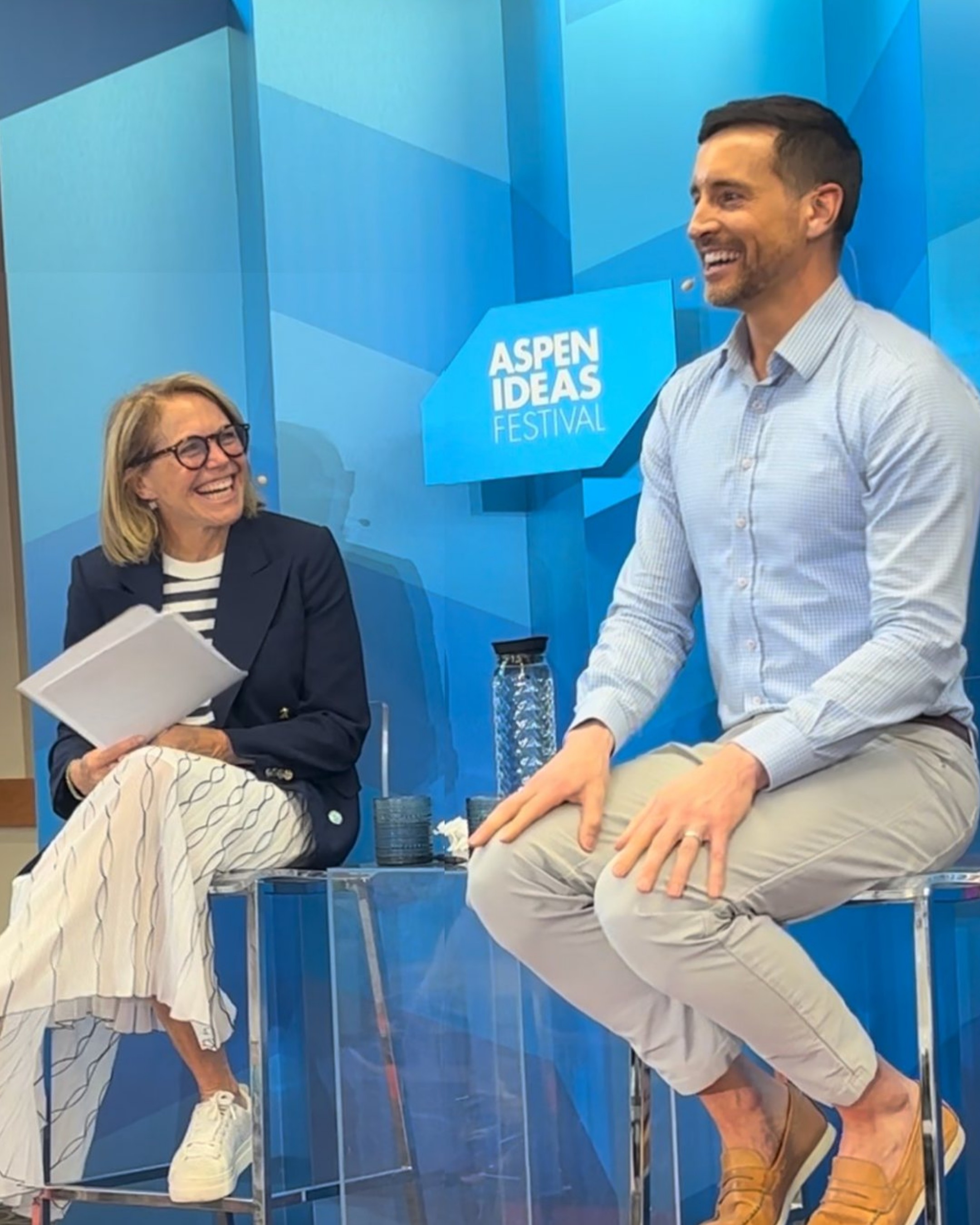
The line over the frame from the second he says it.
No face. Useful when no photo suits the line.
Five cards. Opens on Katie's question, pays off on her admitting she doesn't know.
Option 2
Three floors down
Mark, the hospital job, the coach who would not hang up. Connor is barely in it and the stage is one line near the end.
The post
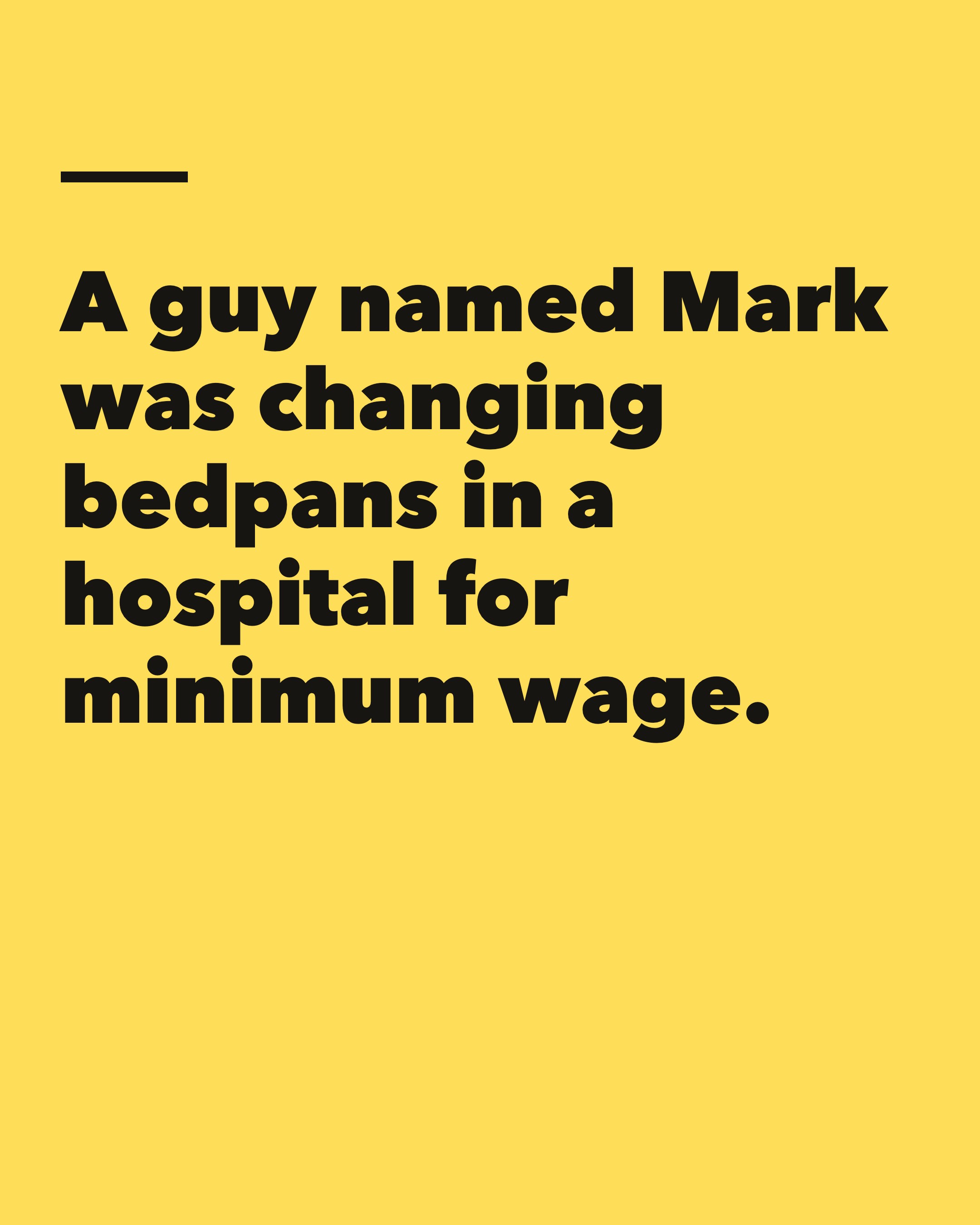
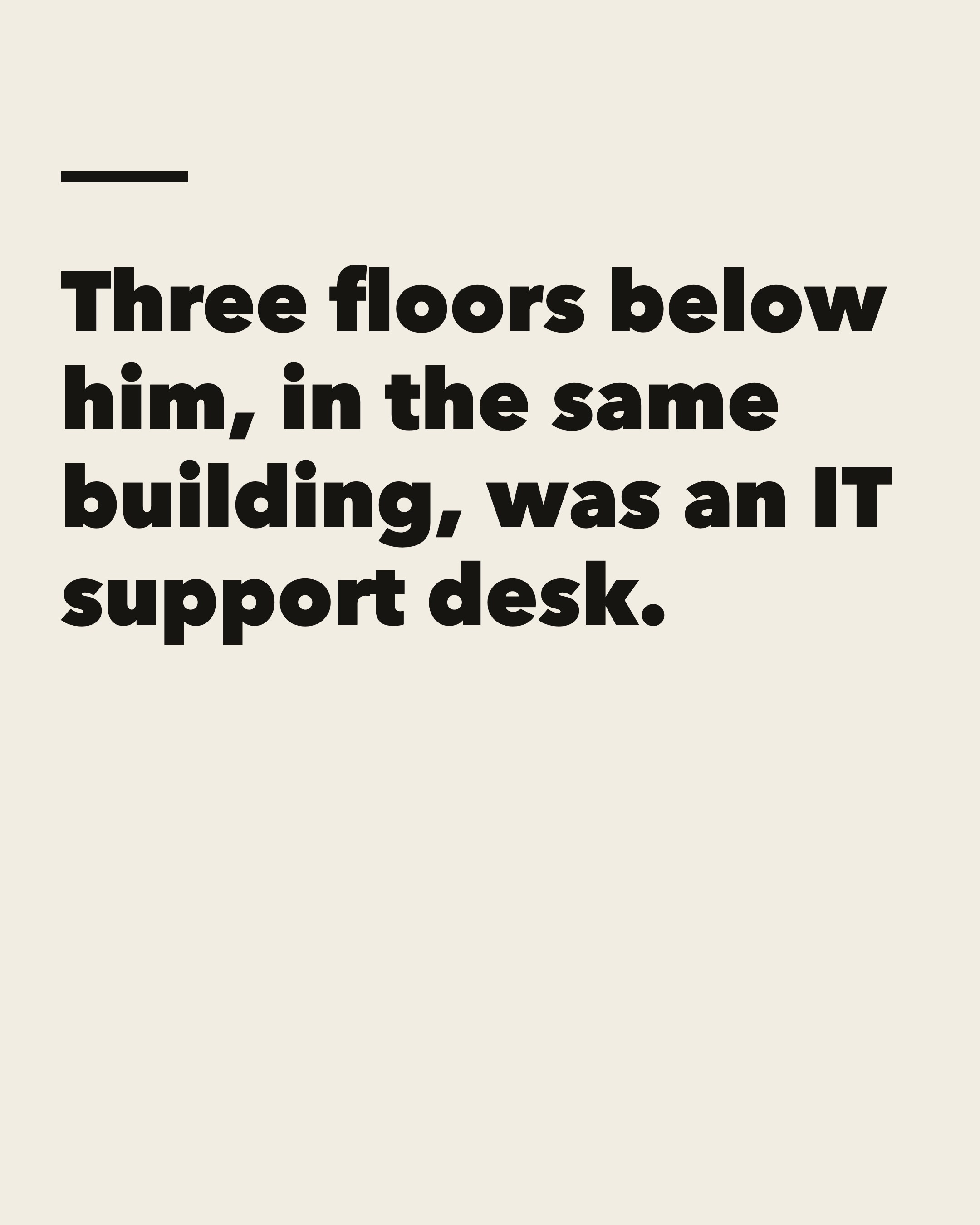
A guy named Mark was changing bedpans in a hospital for minimum wage. Three floors below him was an IT support desk.
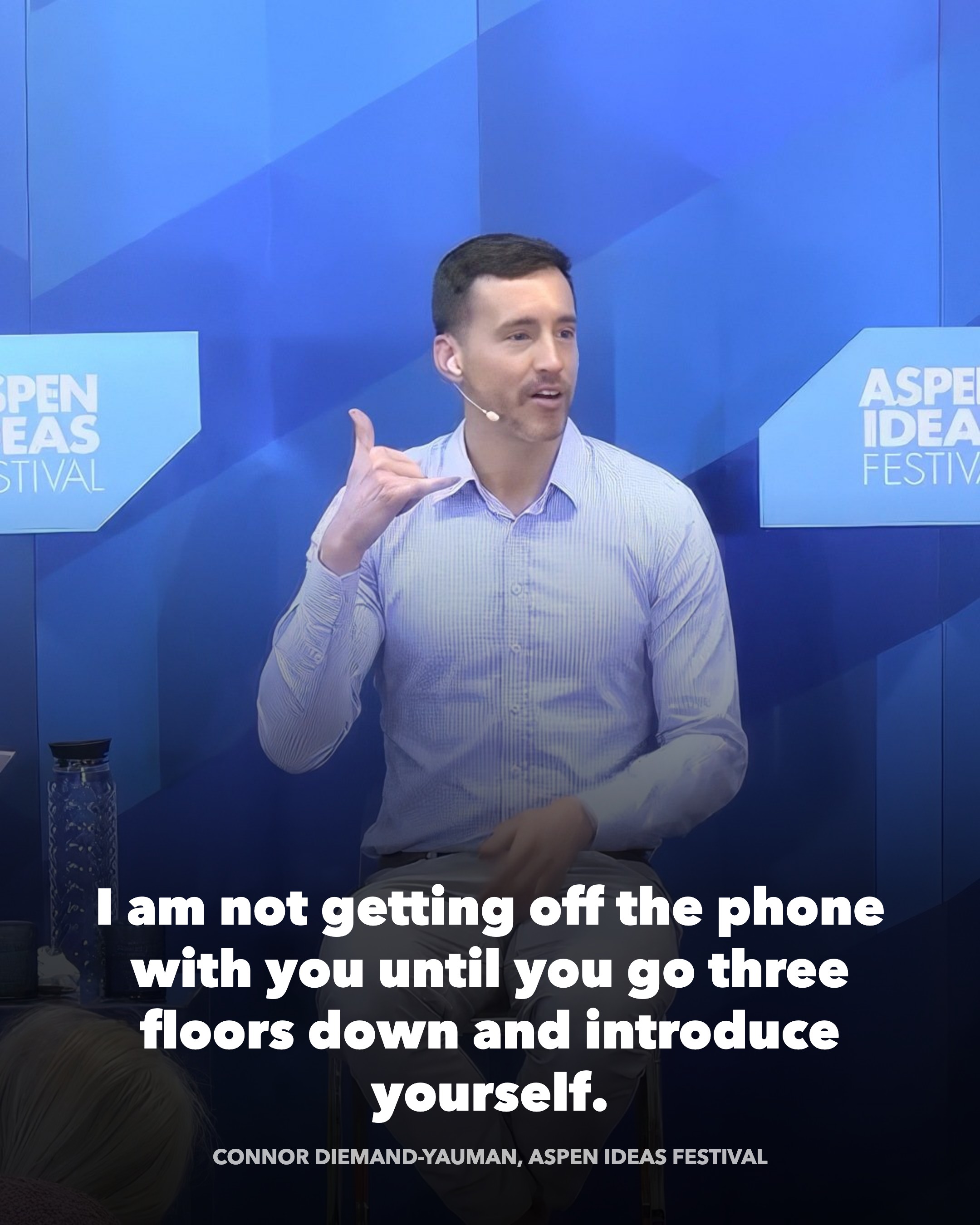
His coach called him three times. The third time she told him she was not getting off the phone until he went down there and introduced himself, and she stayed on the line while he rode the elevator down.
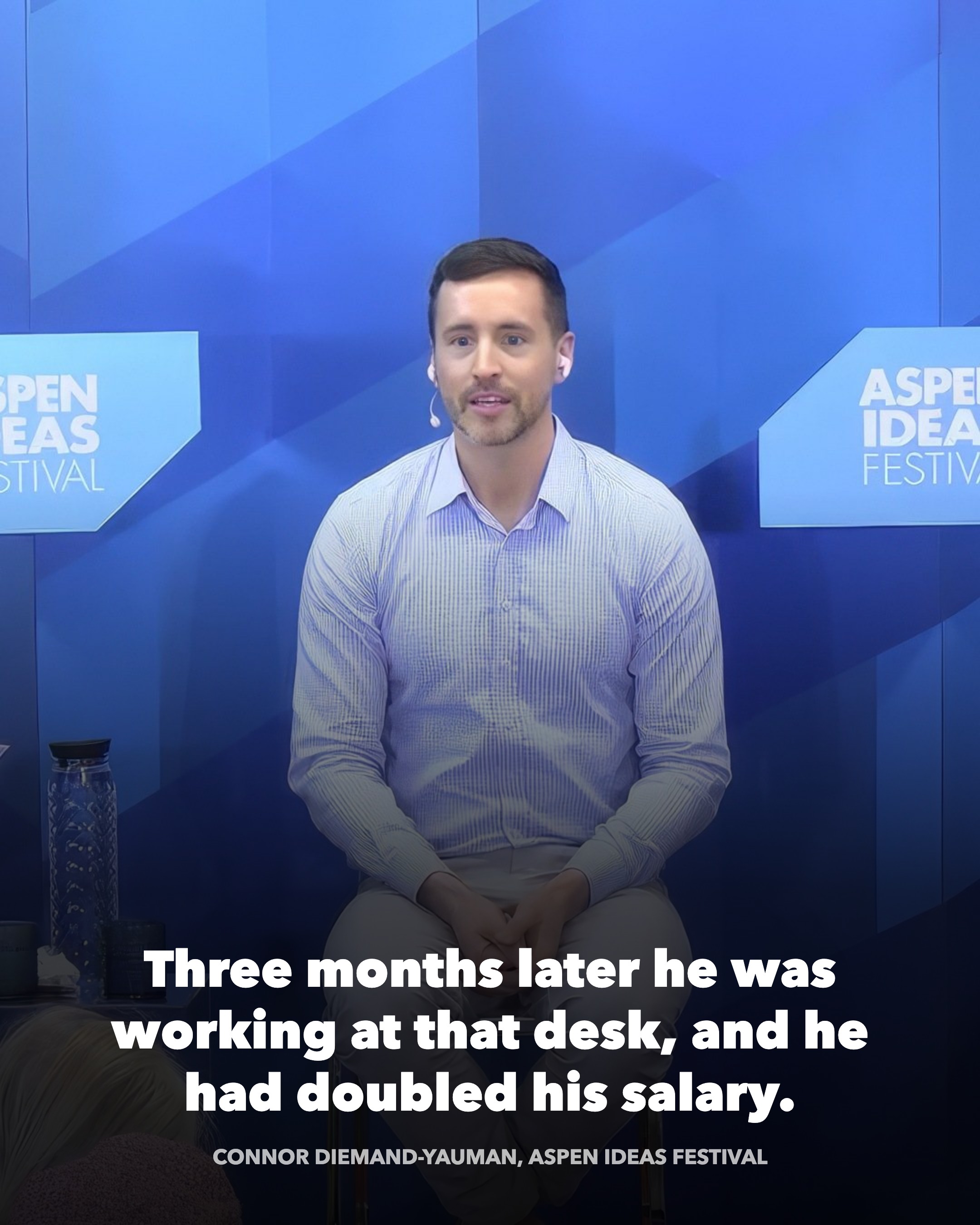
Three months later he was working at that desk and had doubled his salary.
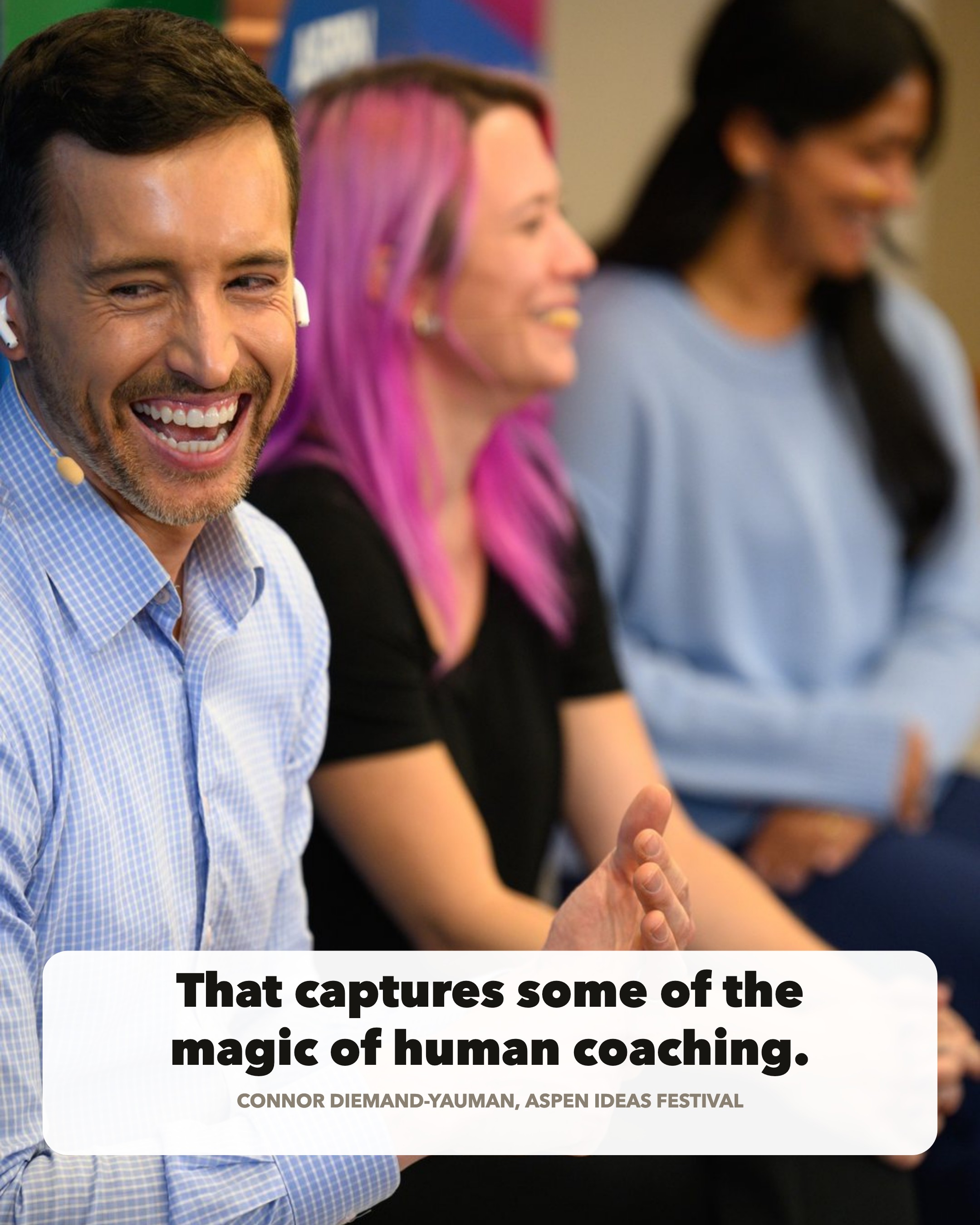
The part that doesn't fit in a clip: that coach wasn't being nice. That was the job.
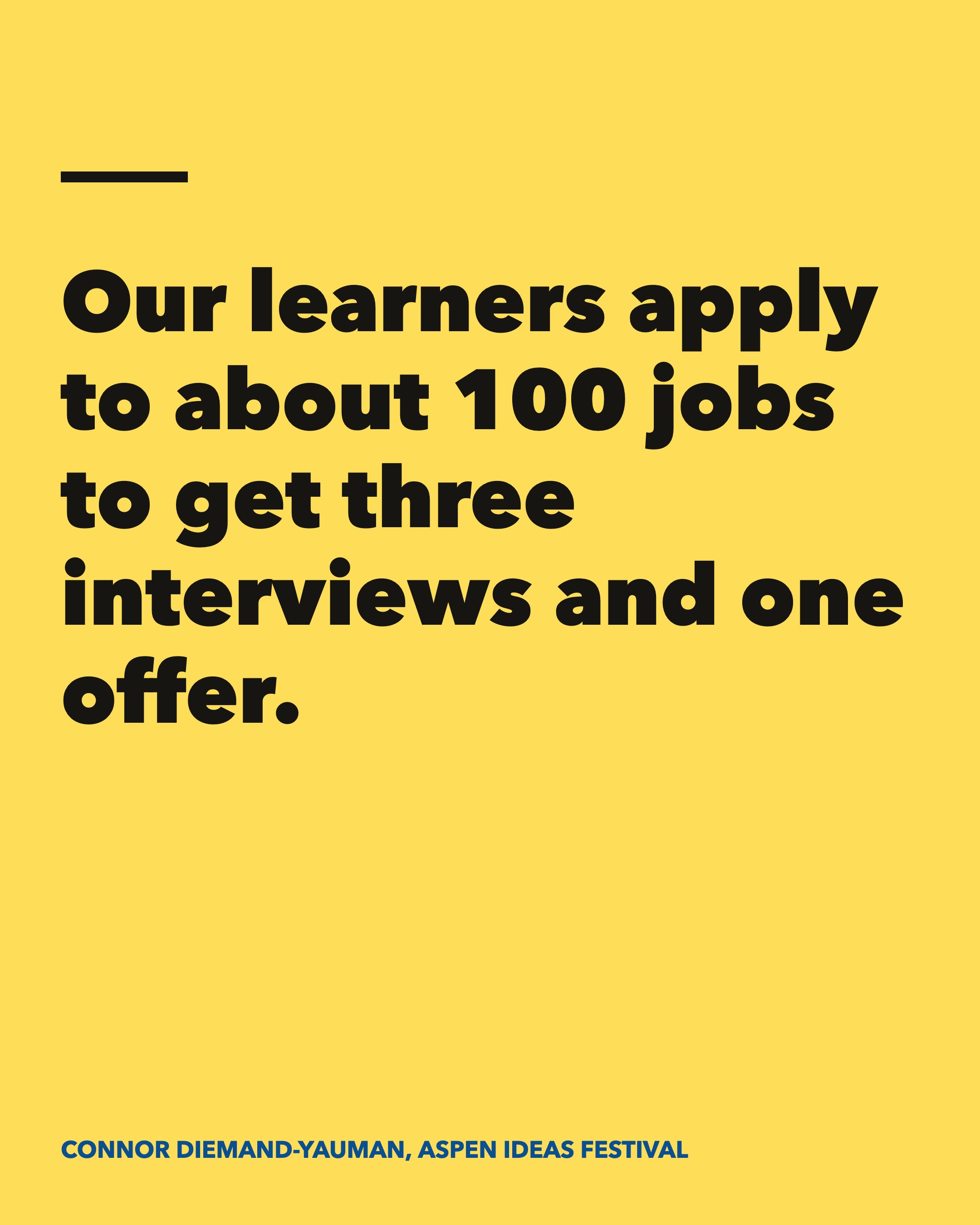
Our learners apply to about 100 jobs to get three interviews and one offer. A hundred. Nobody grinds through that alone at the end of a shift, which is why we spend real money on coaches instead of more content, and why we get around 5,000 applications for every coach role we post.
It's the least scalable thing we do and the least optional.
The video
Ways to do the picture
No type at all. The caption carries the words.

The line over the frame from the second he says it.
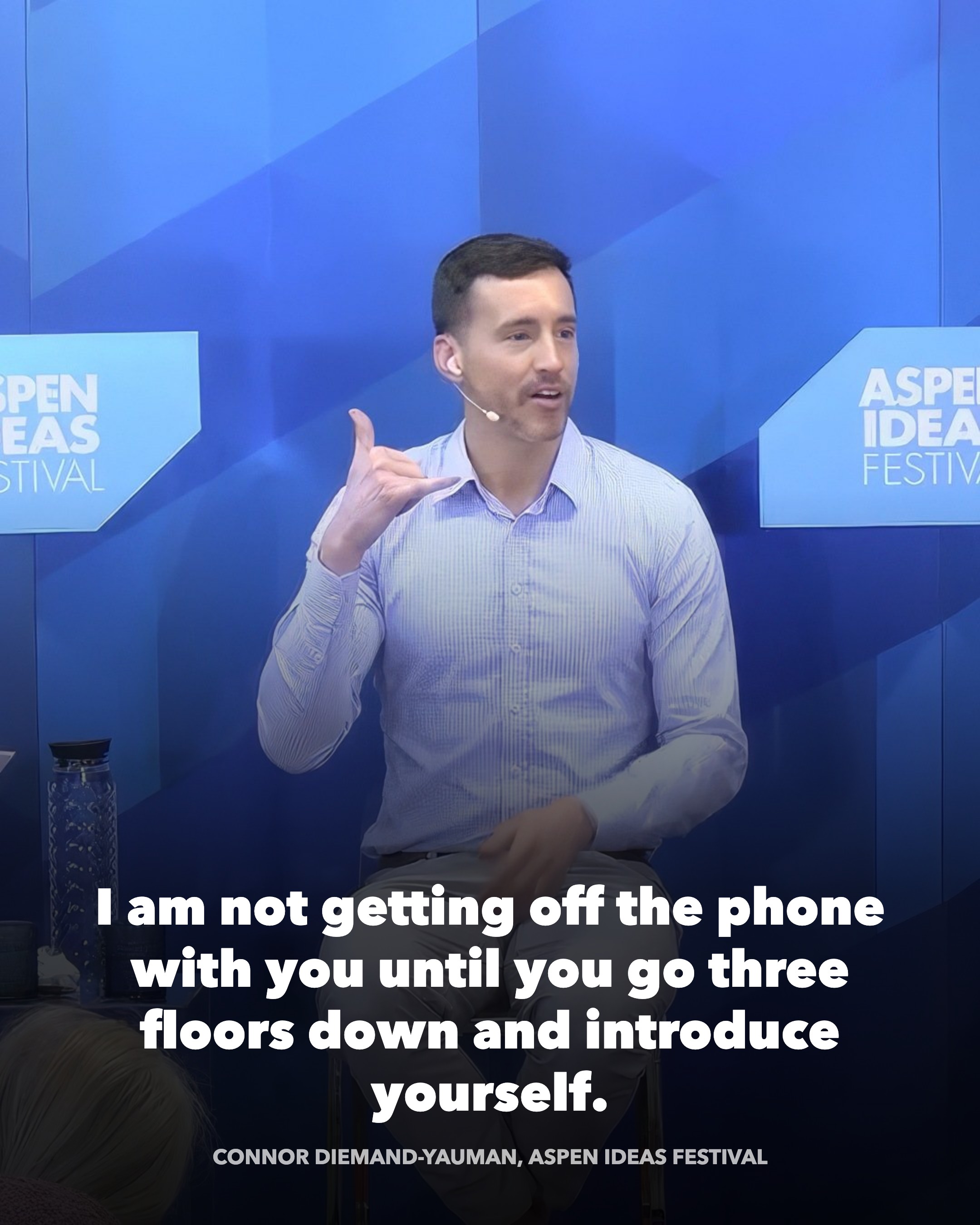
The number, with no face.
Six cards. The story in order, then what it costs to do it.
Option 3
I offended the room
Katie asks why Merit needs to be a college. The answer is the $250 billion club, and the college arrives as an aside rather than an announcement.
The post
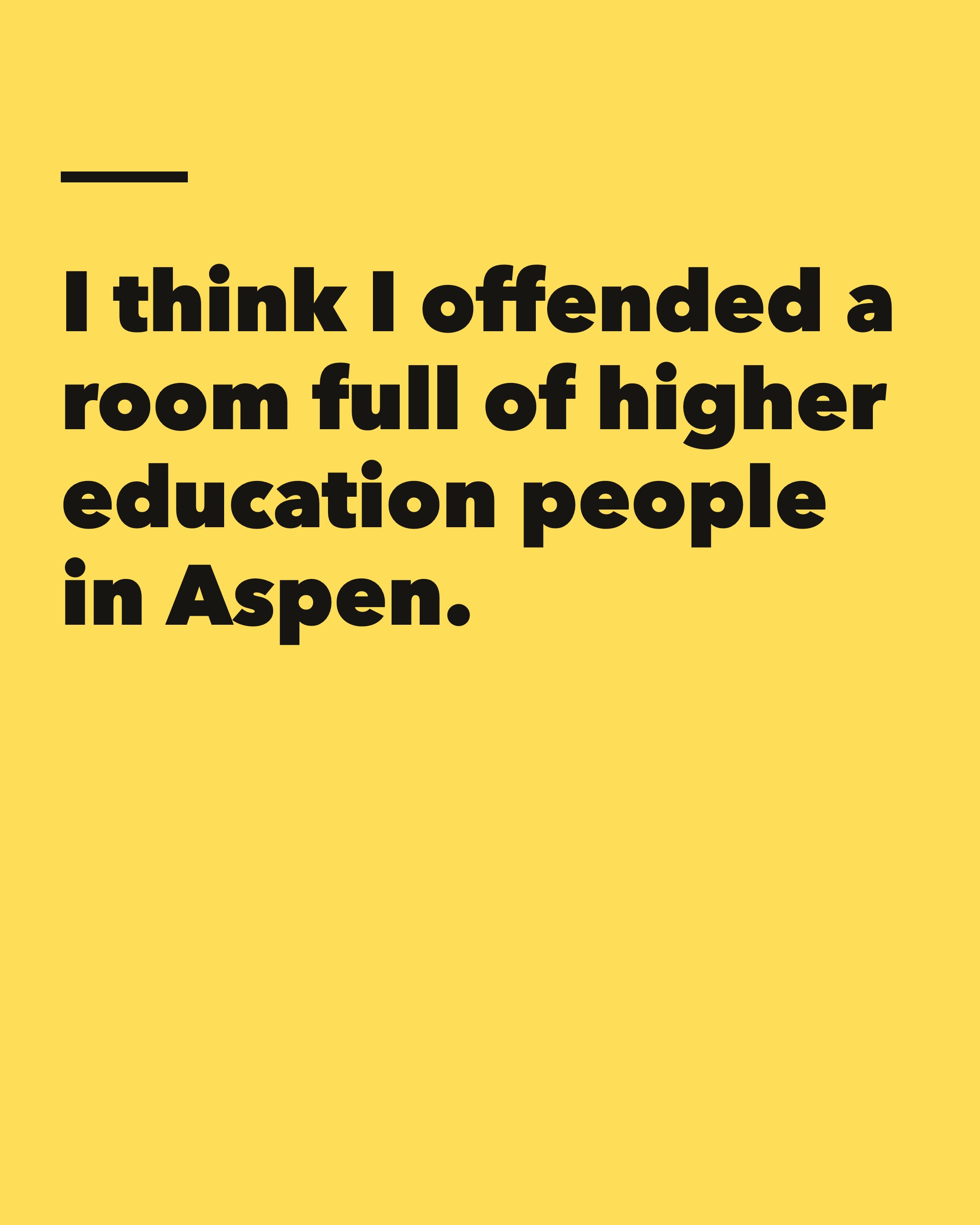
I think I offended a room full of higher education people in Aspen this summer.
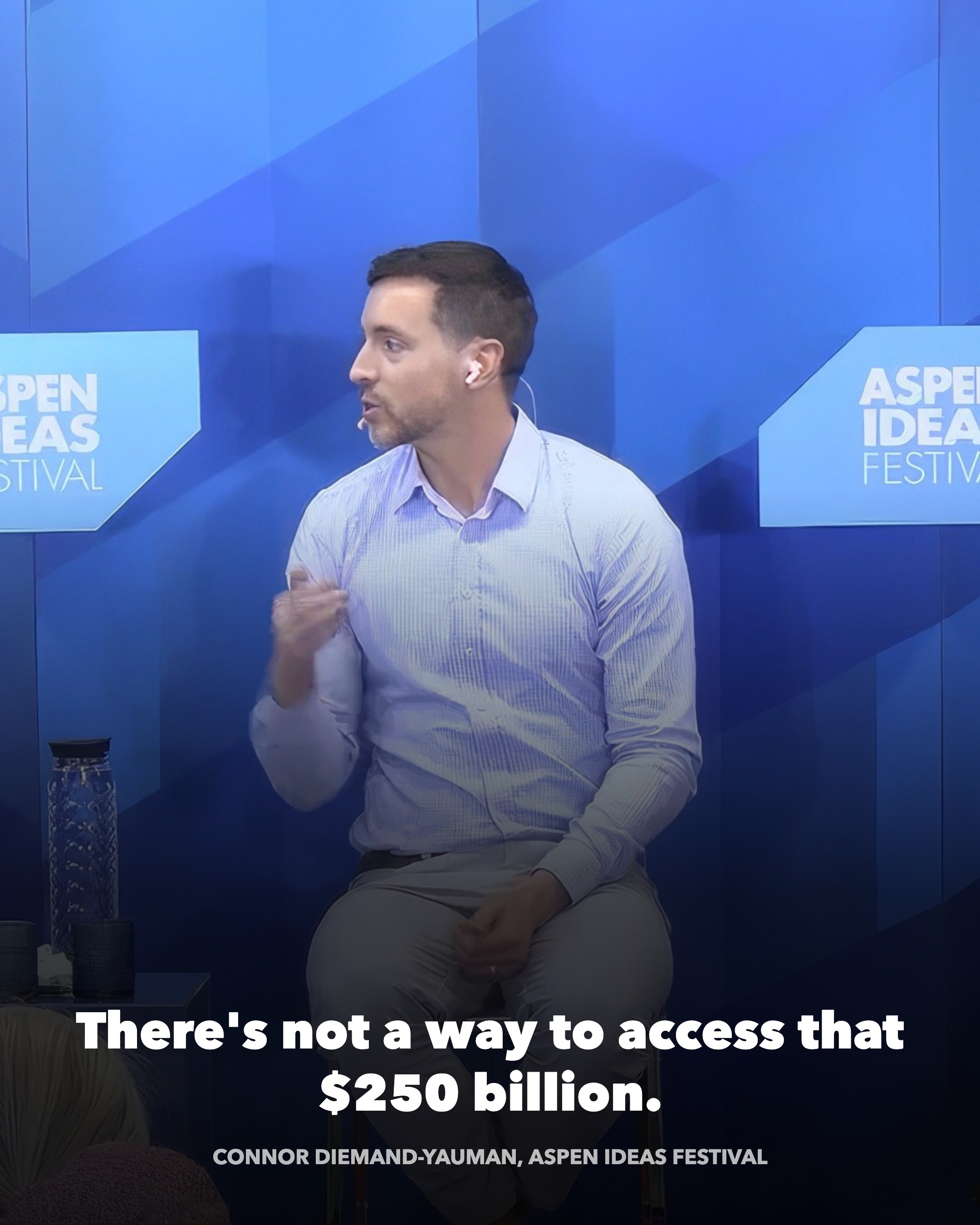
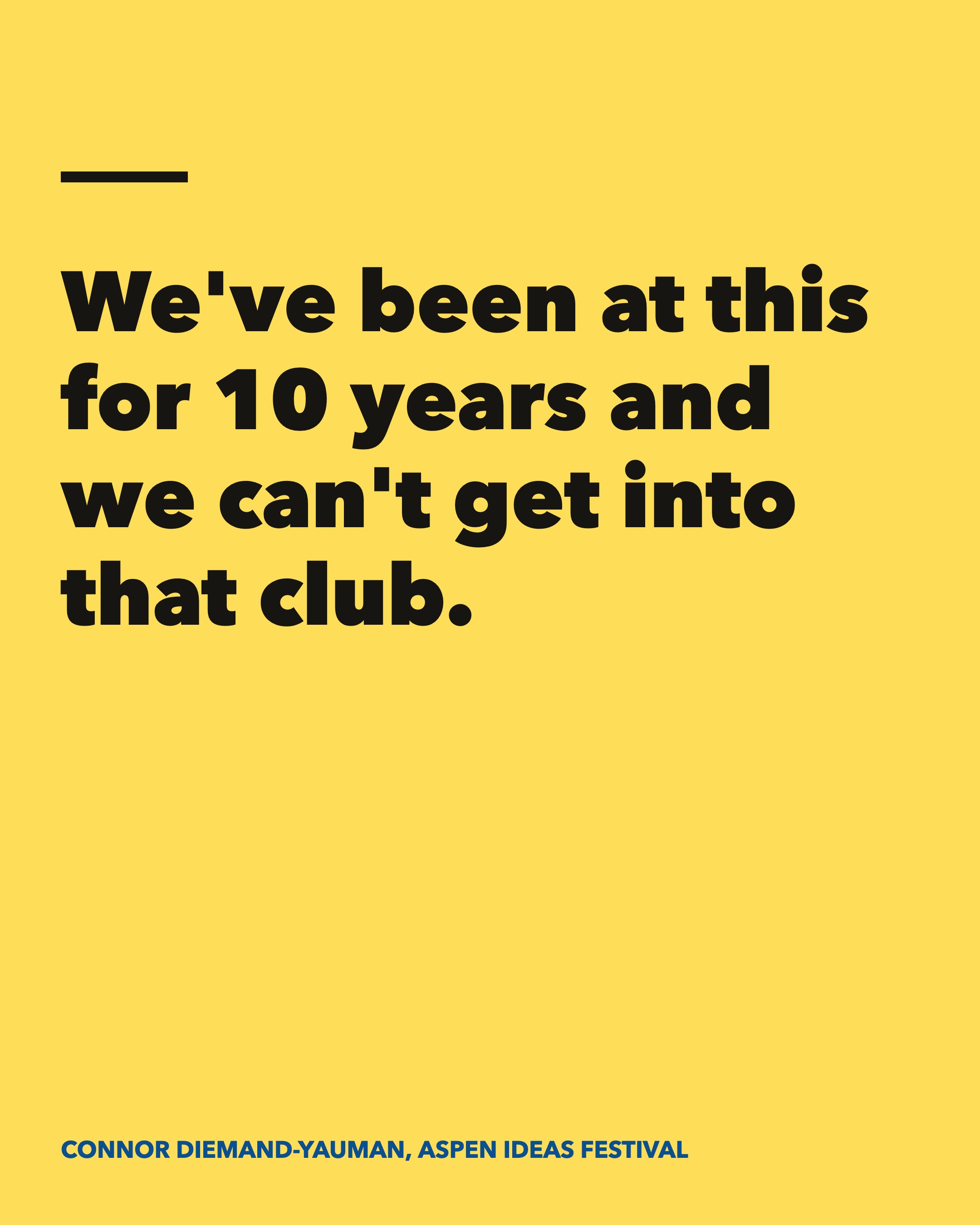
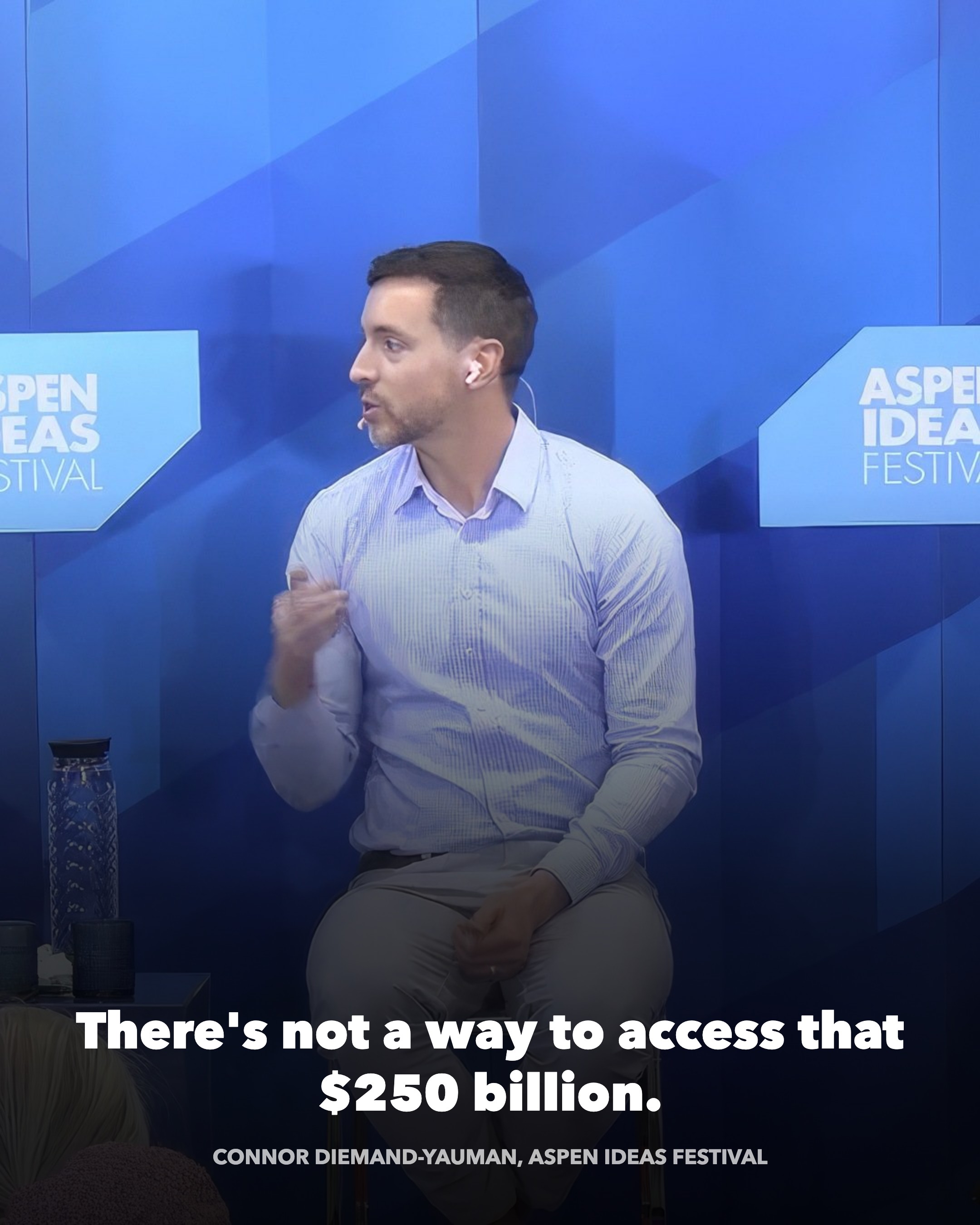
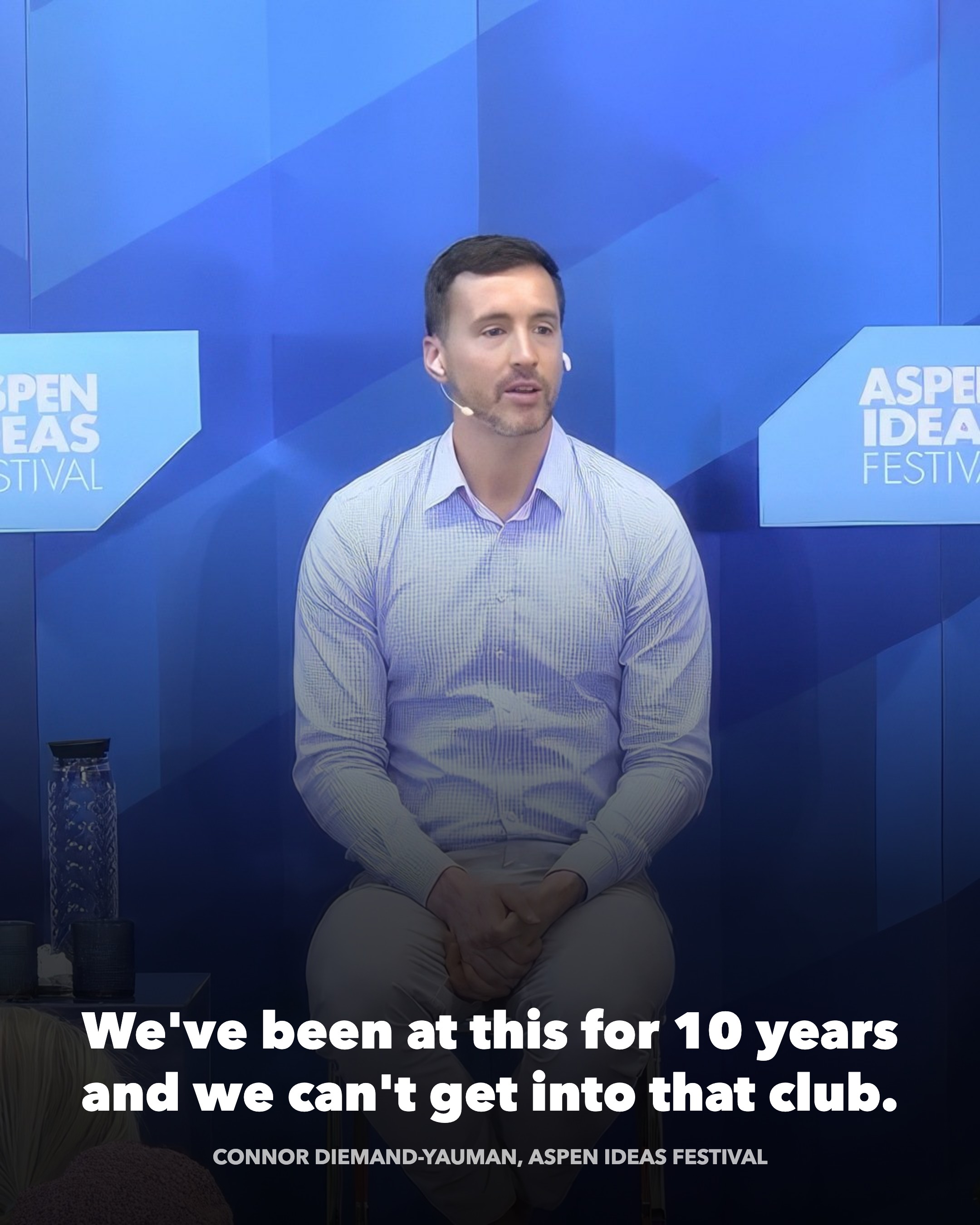
Katie Couric asked why Merit America needs to become a college when our learners already finish in four months and double their salaries. I gave the honest answer: there's about $250 billion in federal funding for higher education, it goes to accredited institutions, and after ten years we still can't get in.
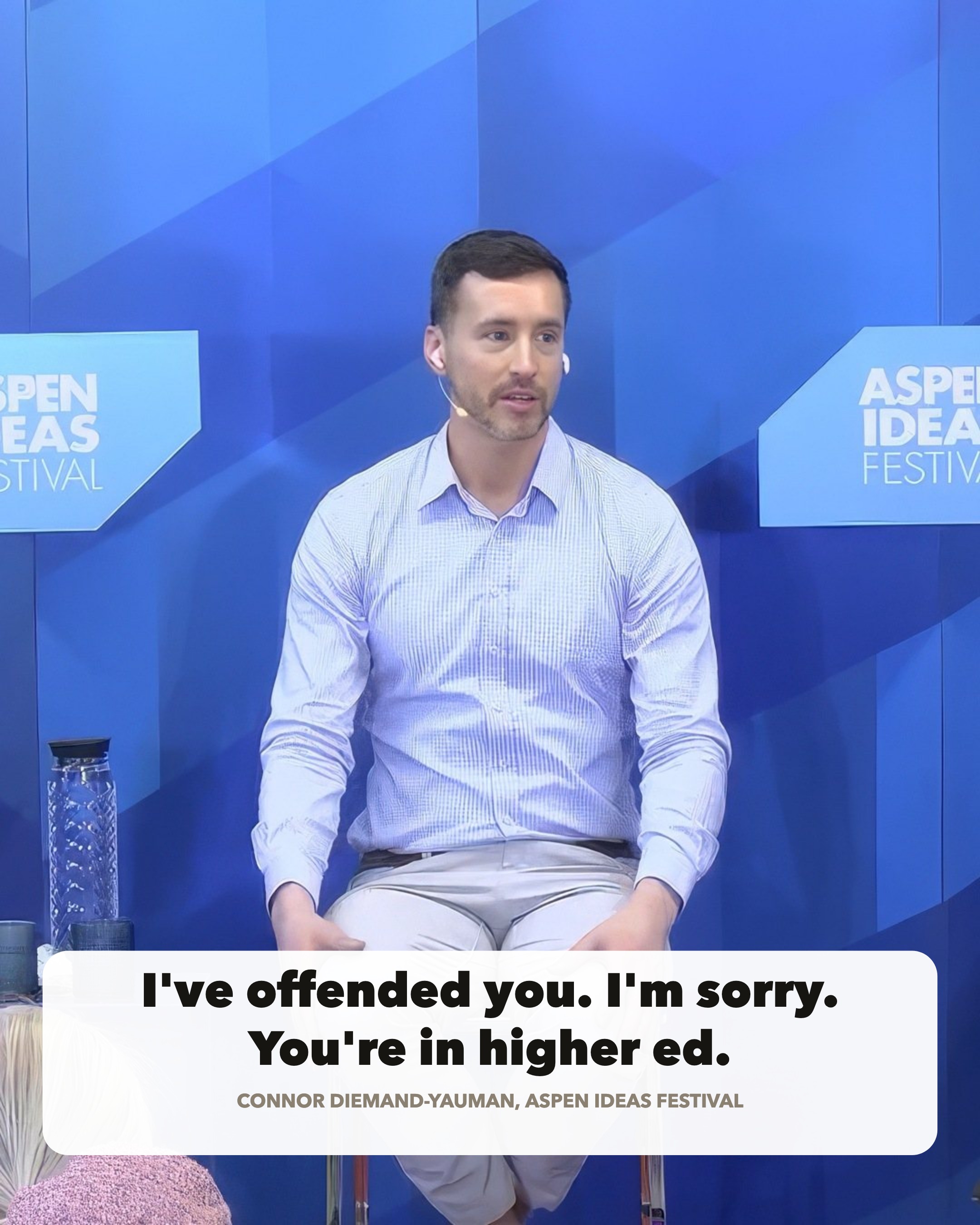
Then I looked at the front row and apologized.
They have a fair point, so let me make it for them. Accreditation exists for a reason and most of the shortcuts around it have not covered themselves in glory.
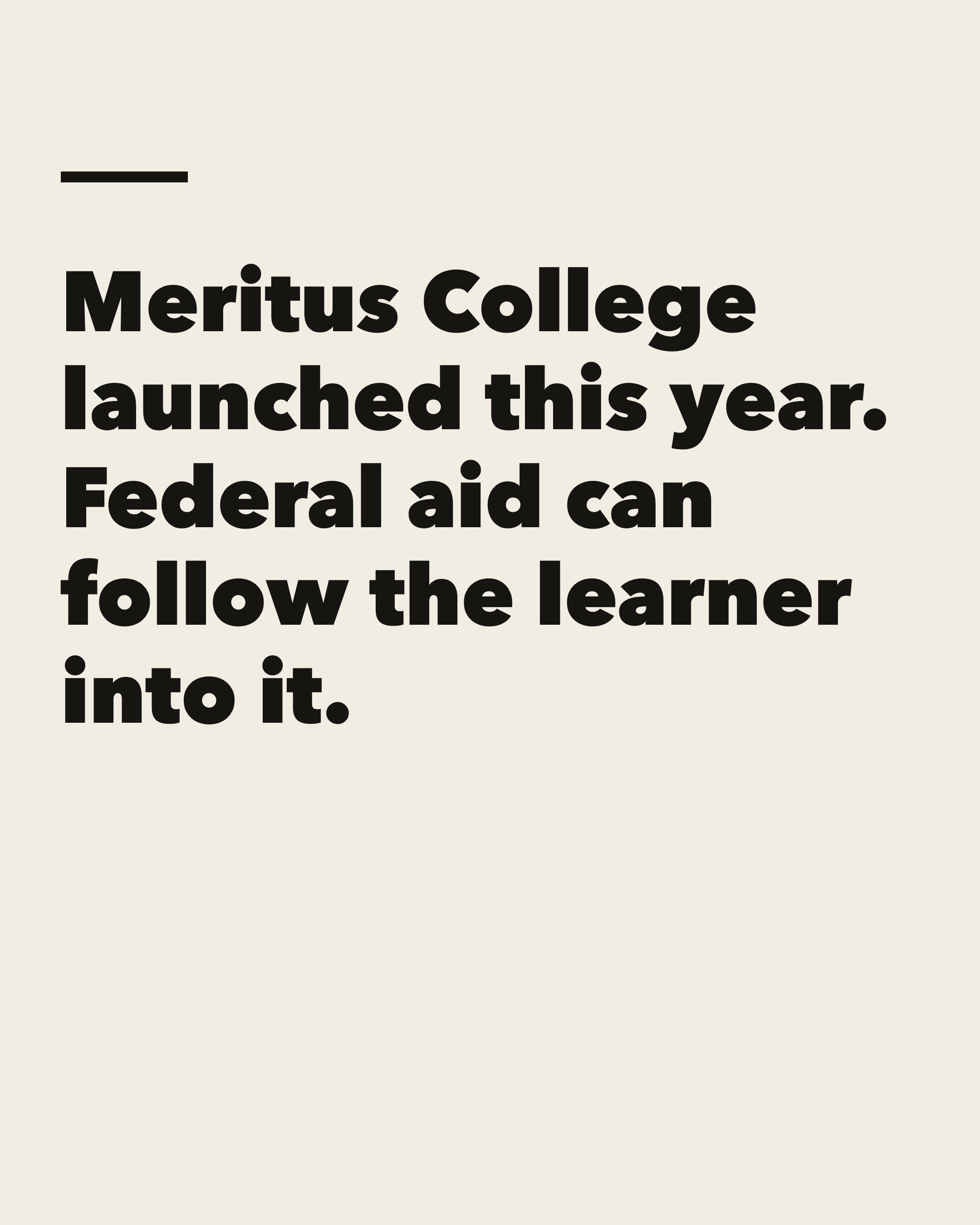
So we're going through it instead of around it. Meritus College launched this year. Same short programs, same coaches, same focus on what people earn afterward. The difference is federal aid can follow the learner into it, which is what takes us from serving tens of thousands of people to hundreds of thousands.
(This is, technically, the announcement. Nobody approved it as the announcement.)
If you work in higher ed and think we're doing this wrong, tell me why.
The video
Ways to do the picture
The whole panel, no type.
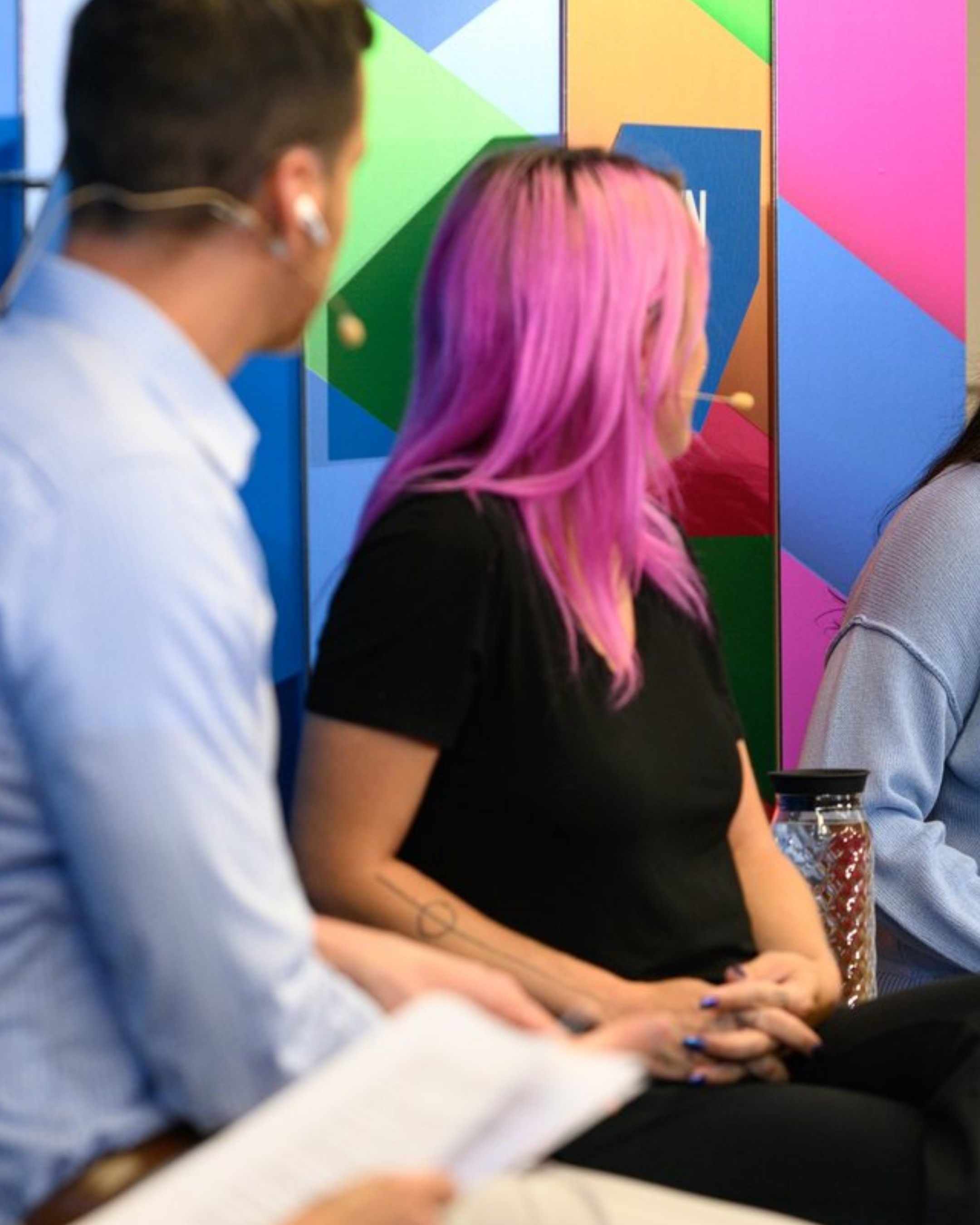
The line over the frame from the second he says it.
The complaint on its own, no face.
Five cards, ending on Meritus.
Also available
The other three people on that stage
Autumn and Alicia are Merit America graduates and they said some of the best lines of the day. These want their own post rather than being added to one of the three above.
Stills
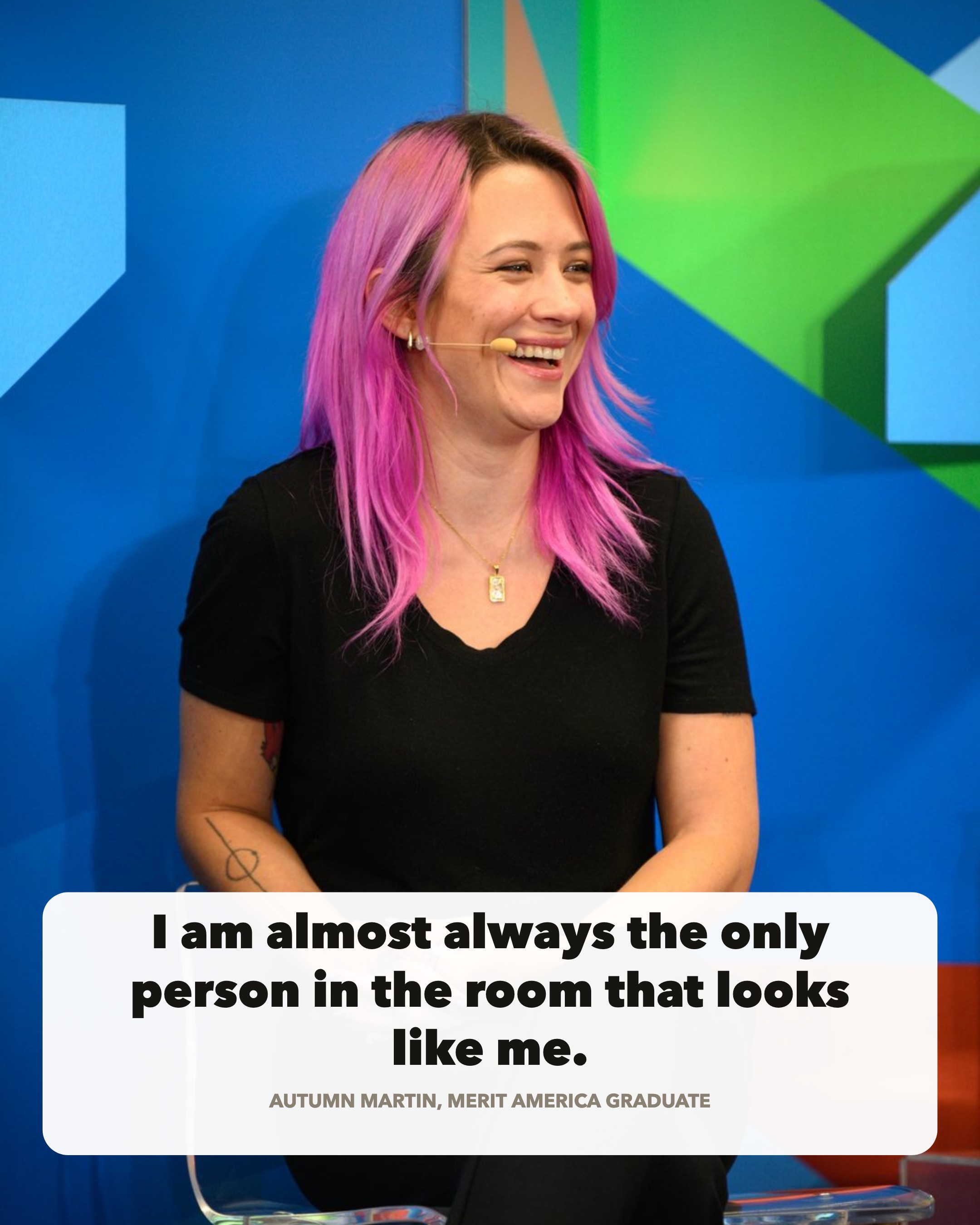
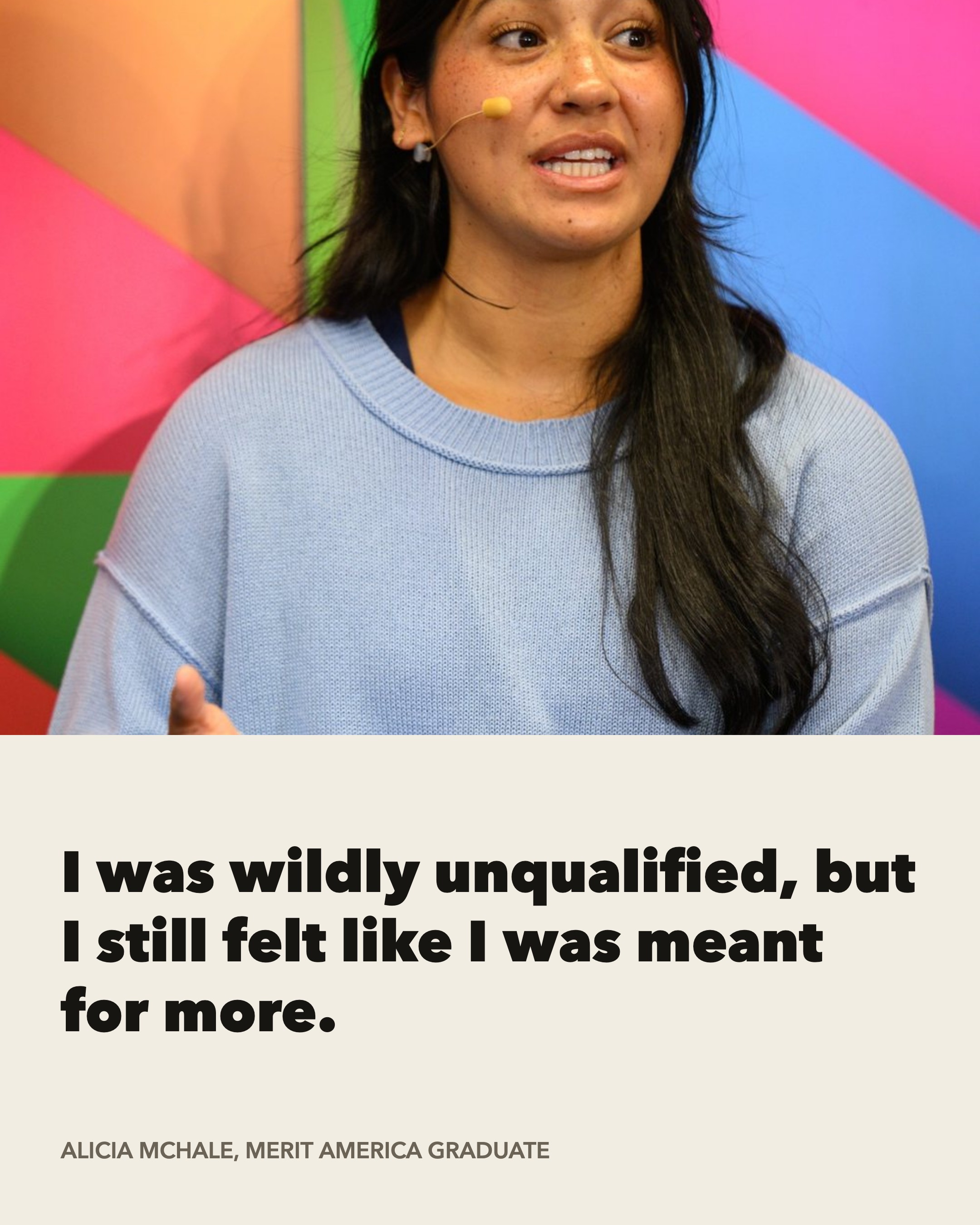
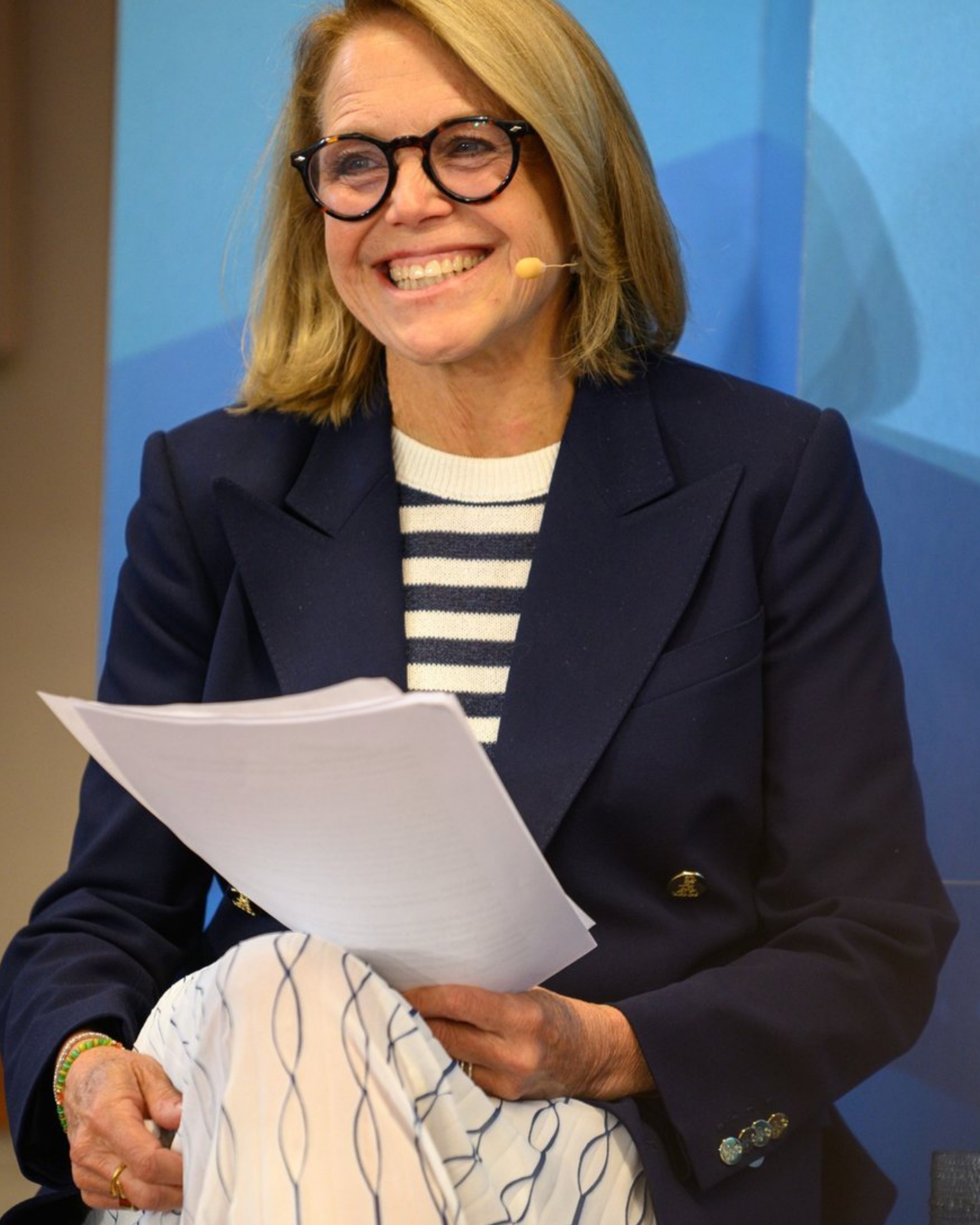
Quality
What the upscaled footage looks like
The panel was shot wide and far away, so a tight crop of it goes soft. This is the same footage run through Topaz to 4K first and then cropped, which is what makes a close-up hold together. Seventy seconds of the nobody-knows section.
Everything we have
The photo library
Click any of these to open the full-size version. The press set was shot by the Aspen Institute's photographer at up to 8256 pixels wide; these are 2400, which is more than Instagram or LinkedIn will ever use.
Press photos
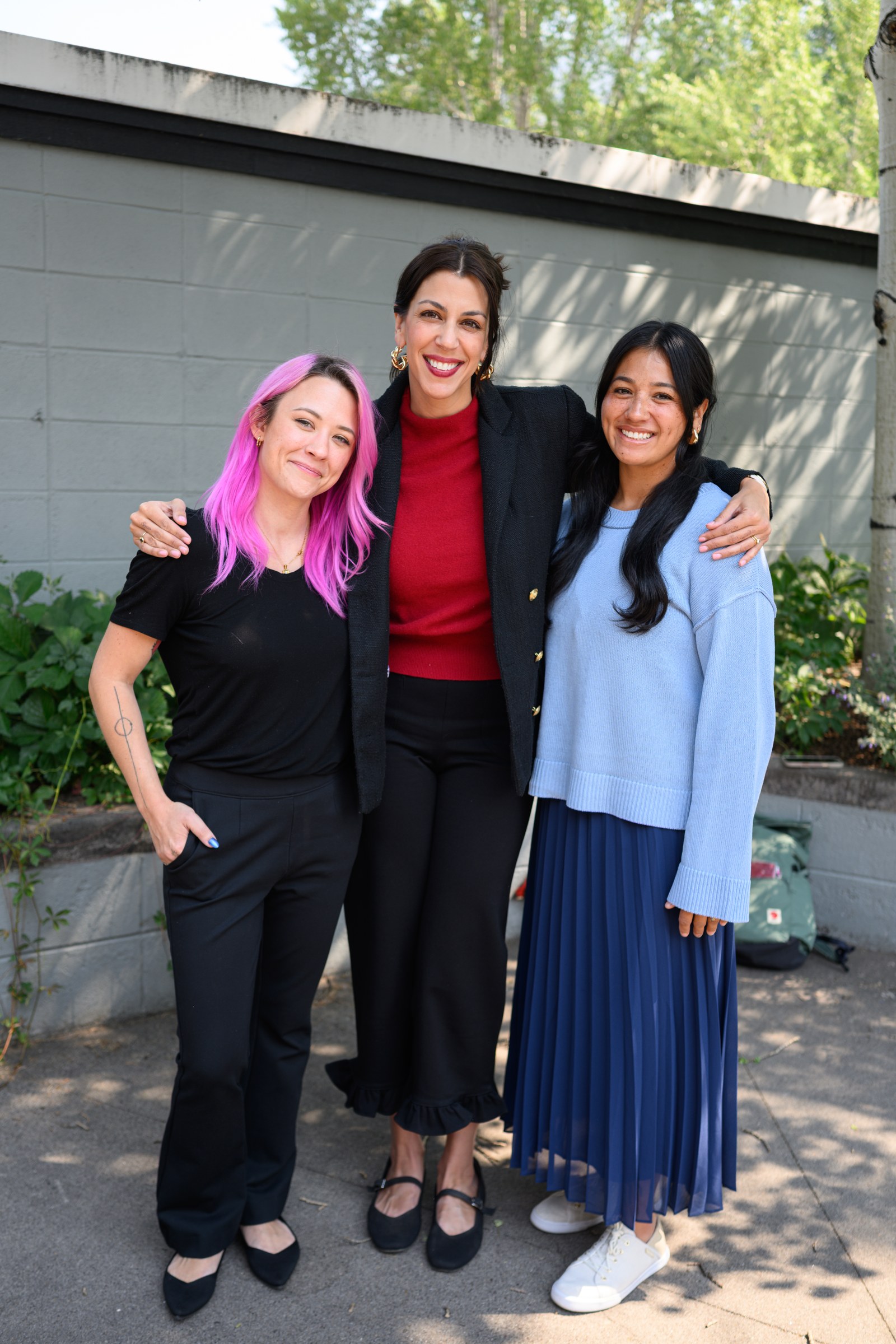
1600x2400 · 549 KB

2400x1600 · 531 KB
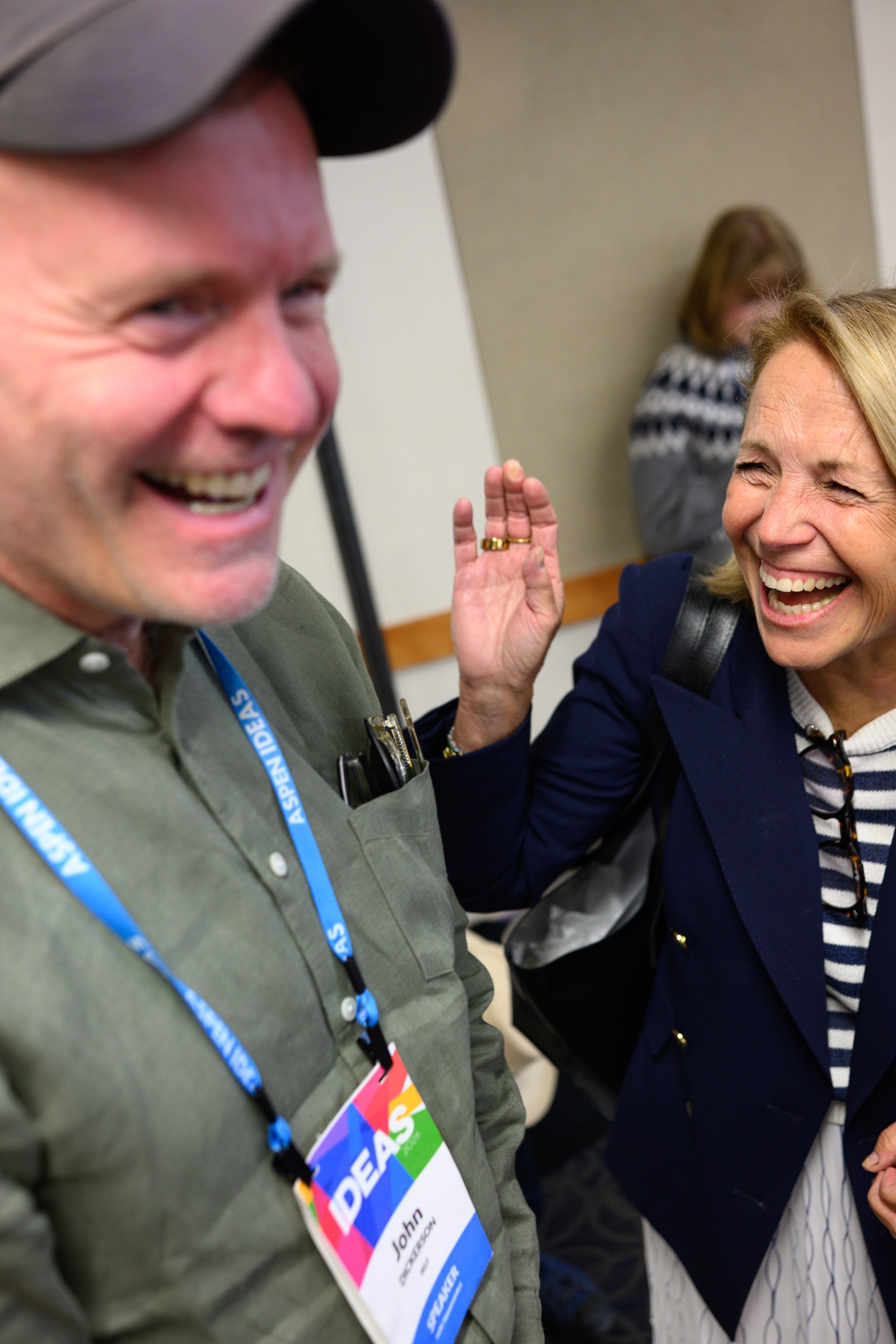
1600x2400 · 423 KB
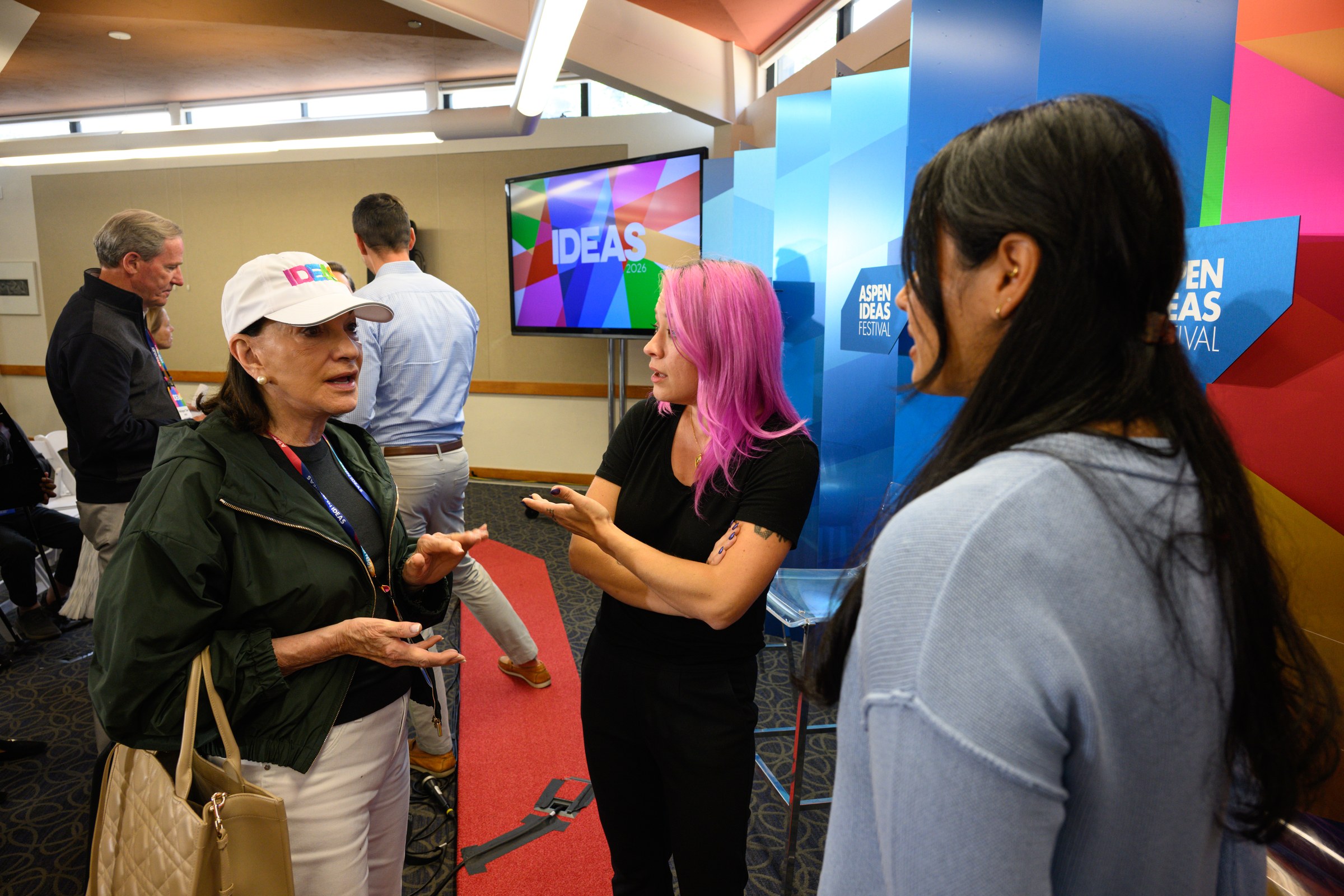
2400x1600 · 591 KB

1600x2400 · 508 KB
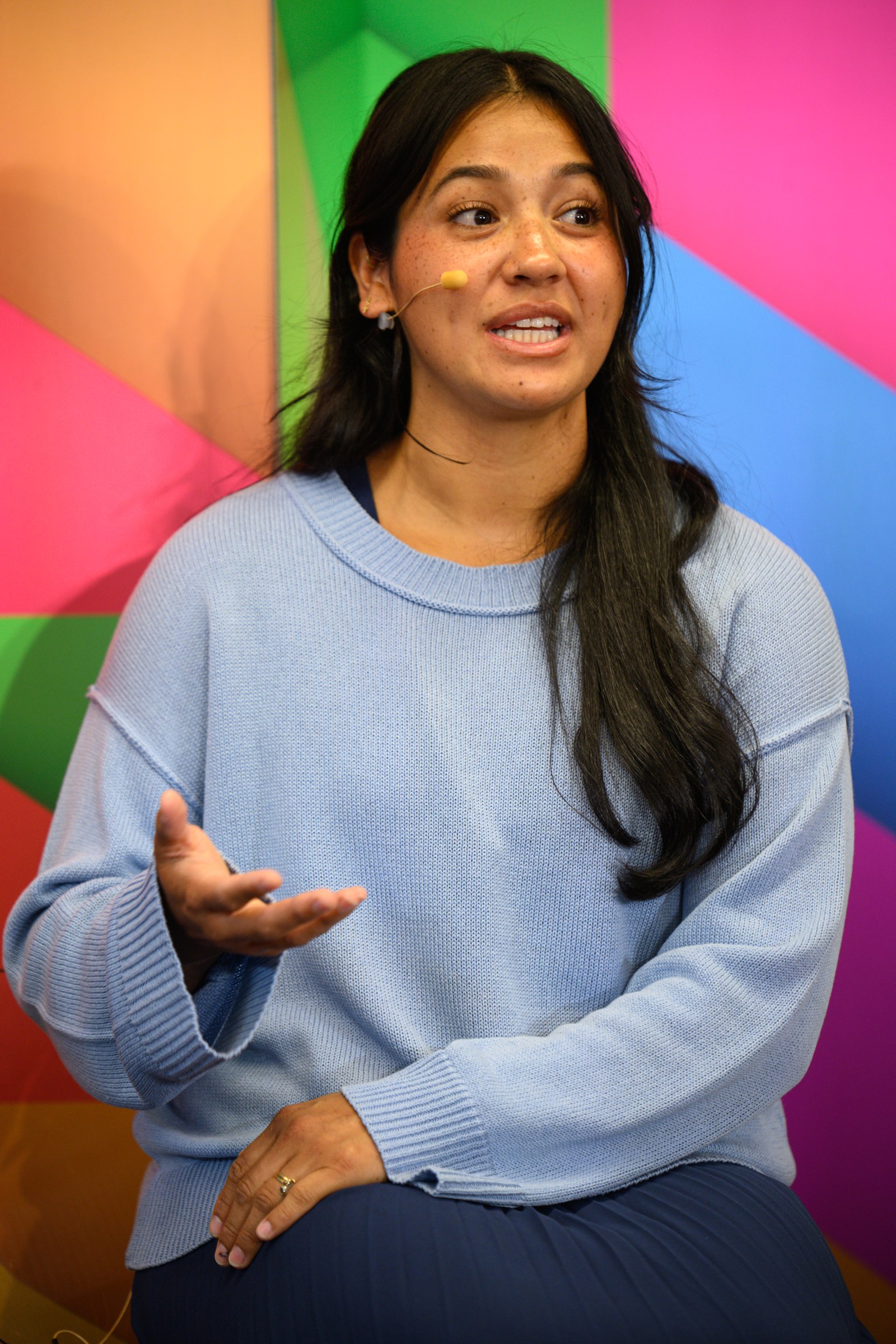
1600x2400 · 721 KB
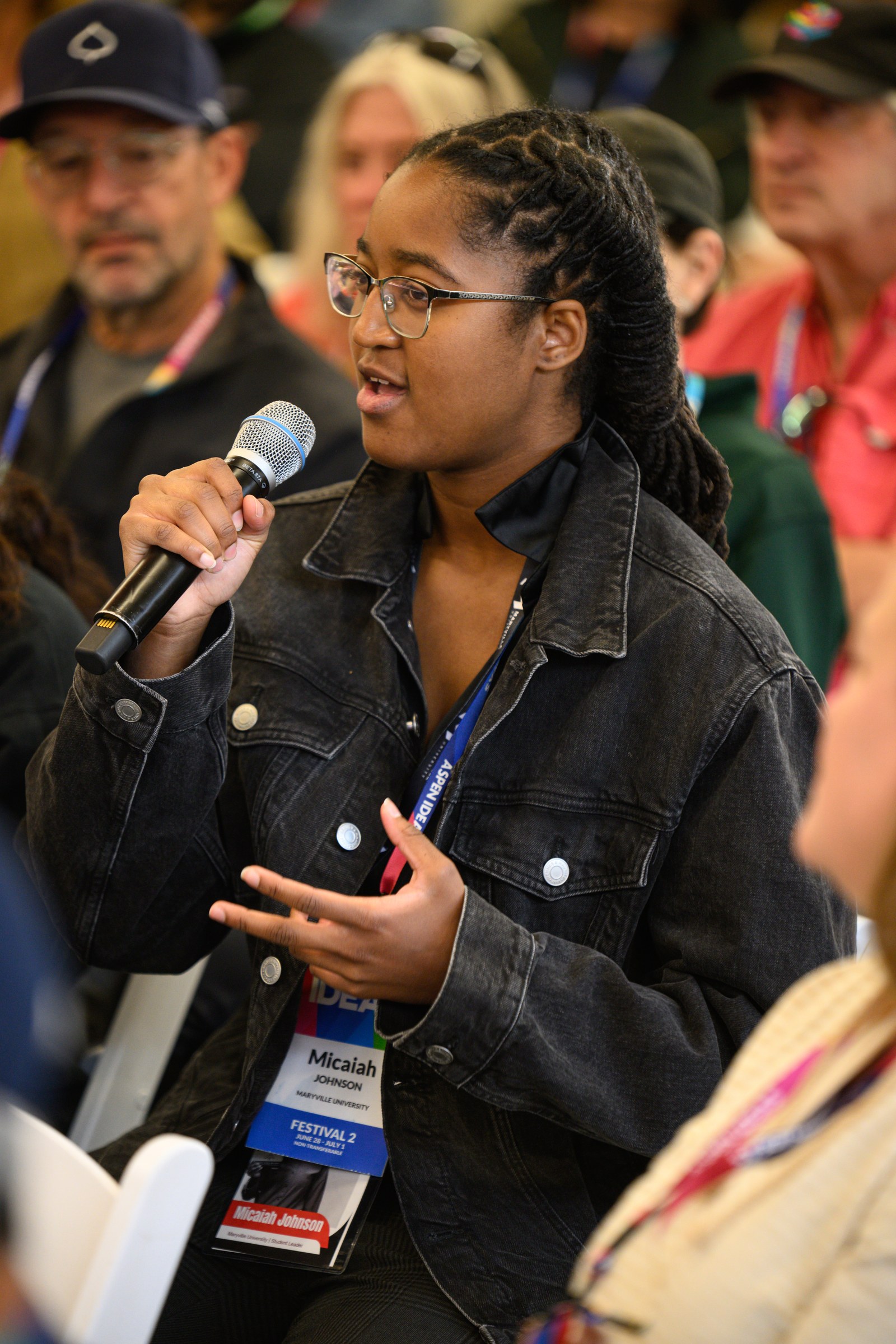
1600x2400 · 615 KB
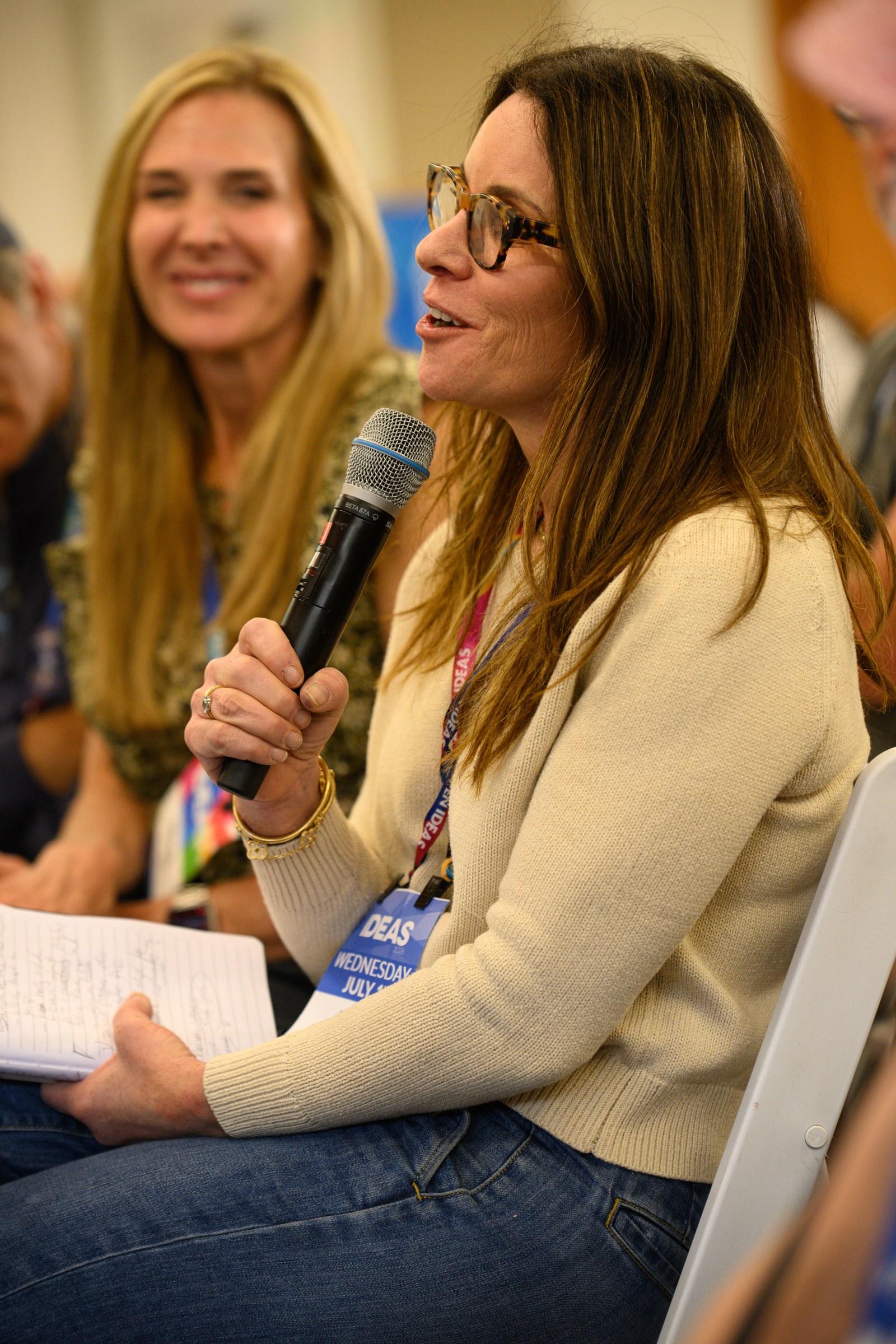
1600x2400 · 784 KB
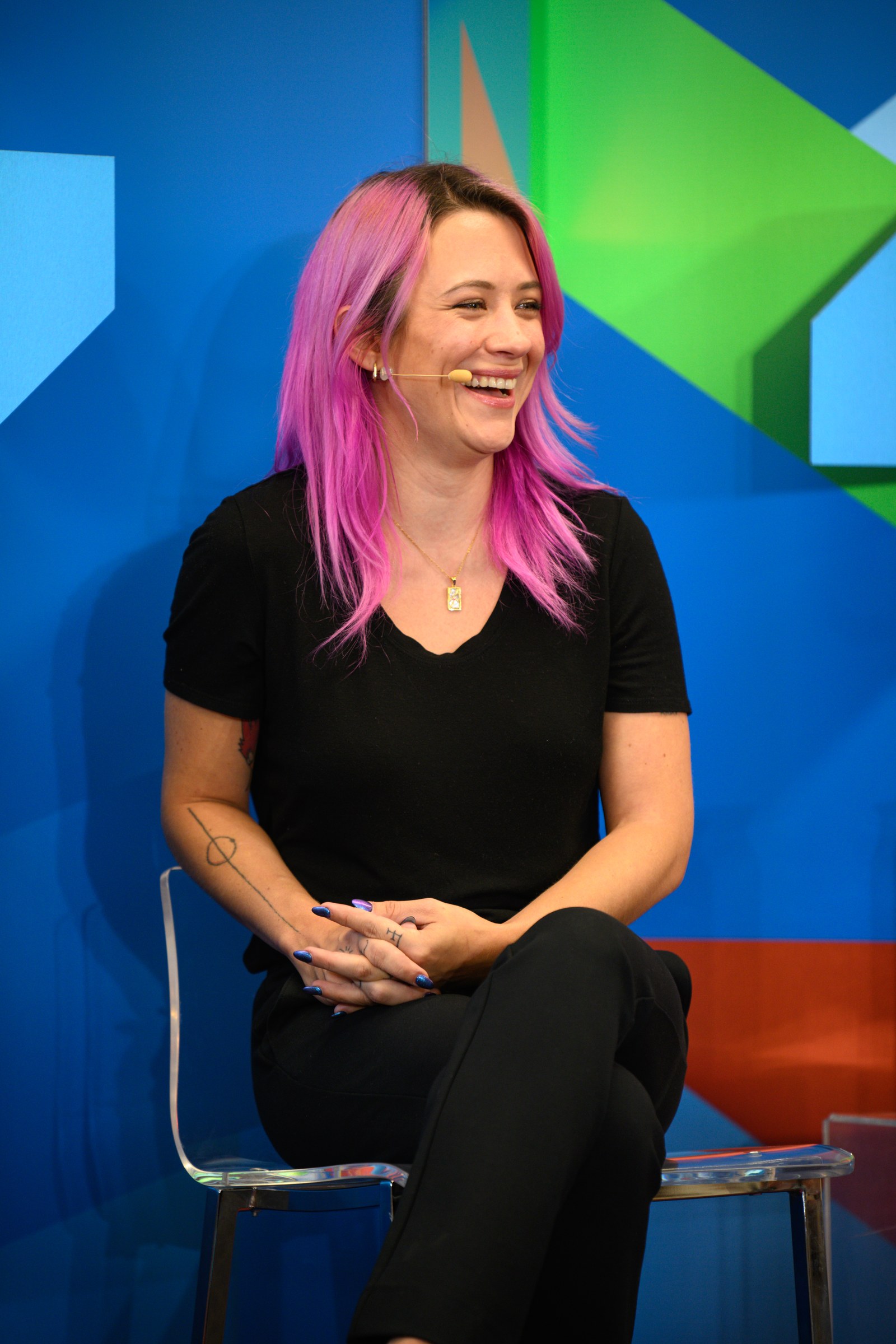
1600x2400 · 415 KB
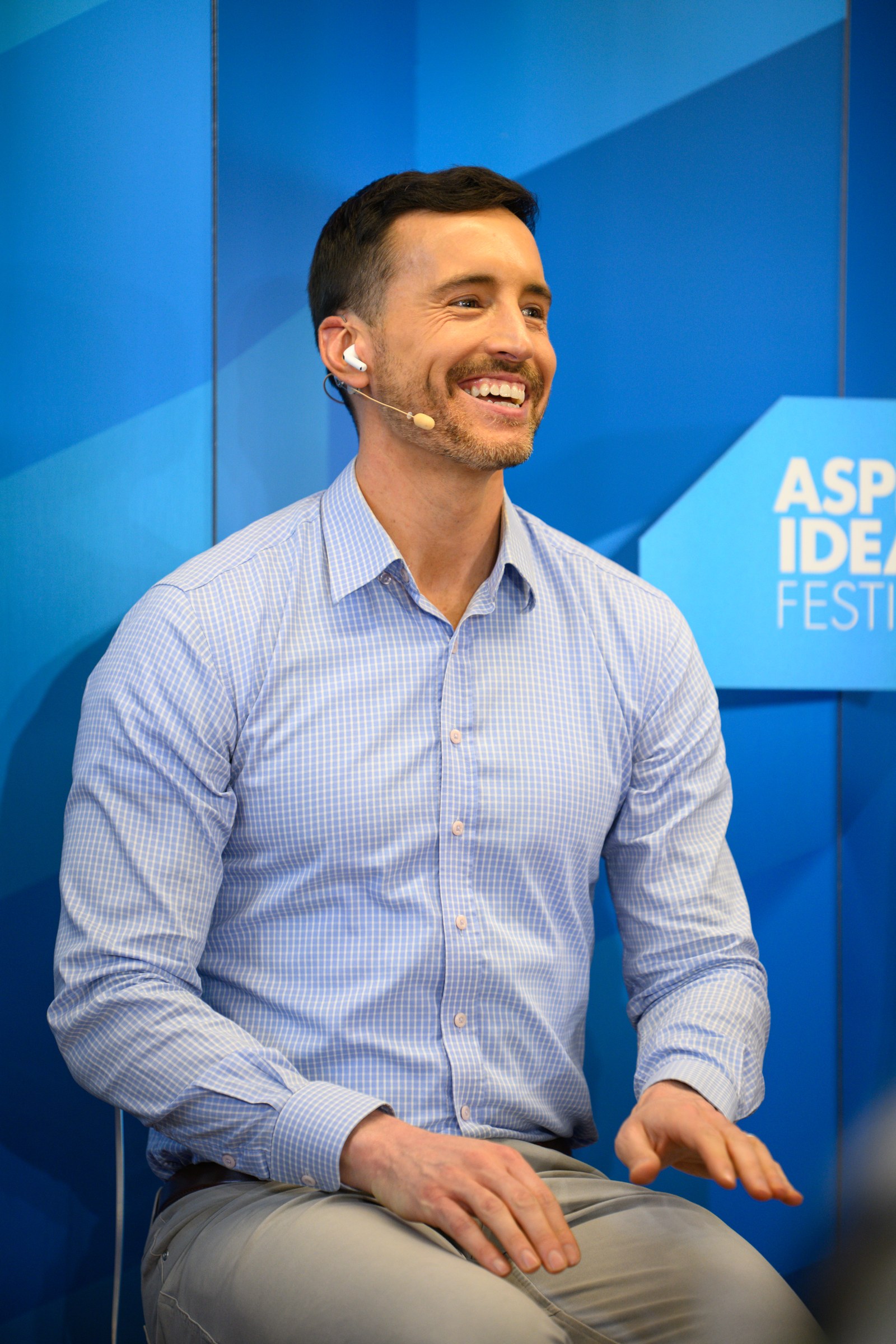
1600x2400 · 600 KB
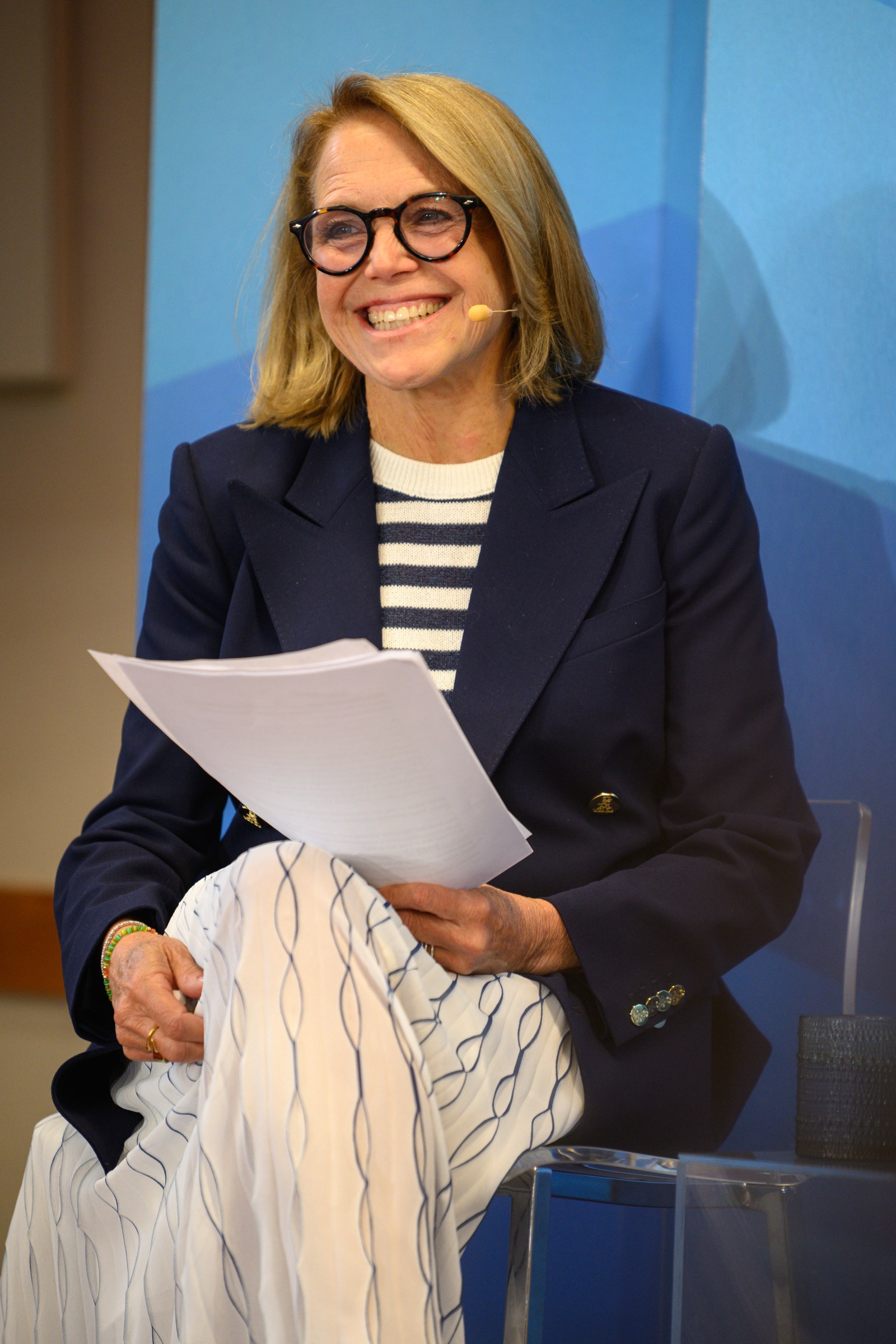
1600x2400 · 487 KB
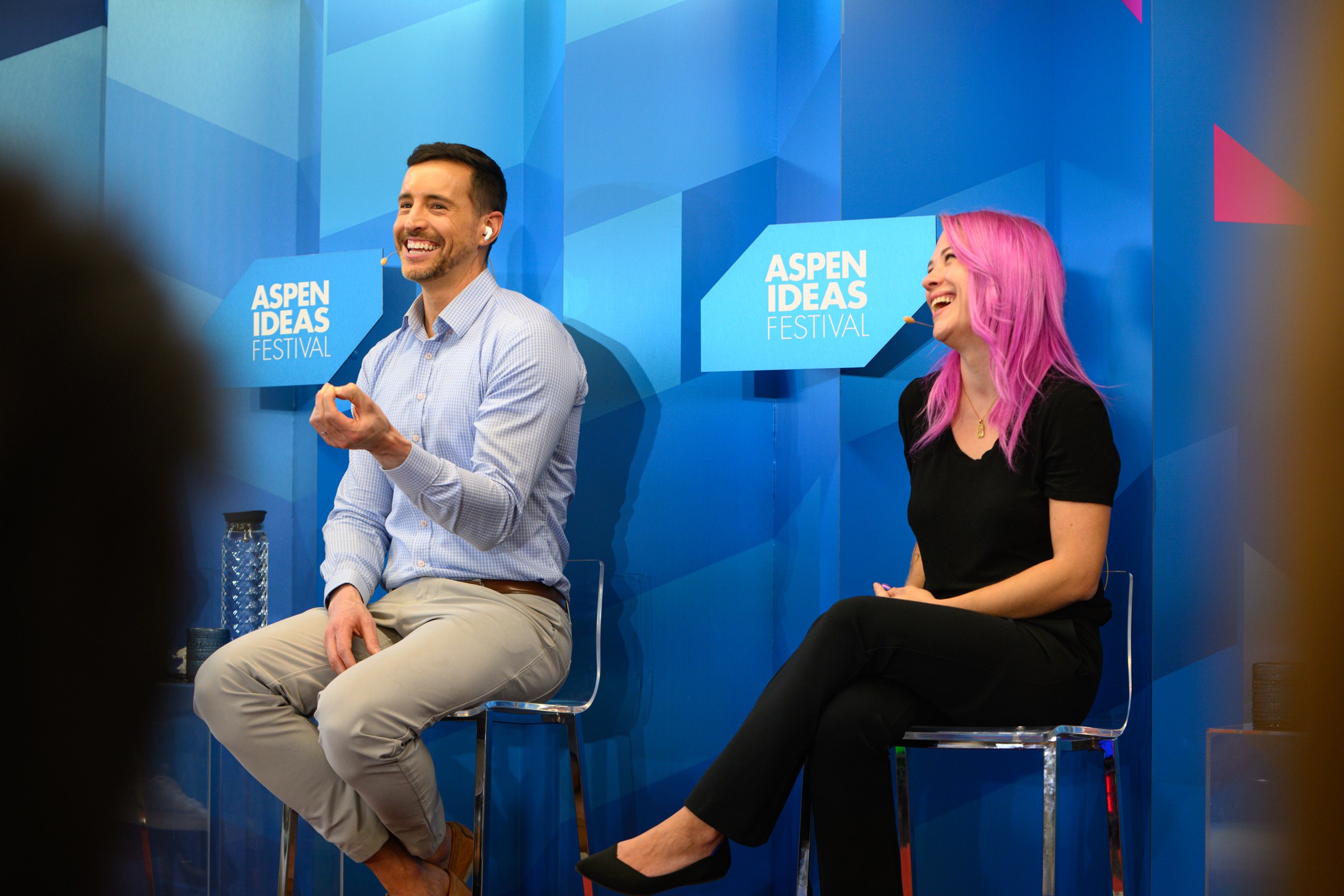
2400x1600 · 472 KB
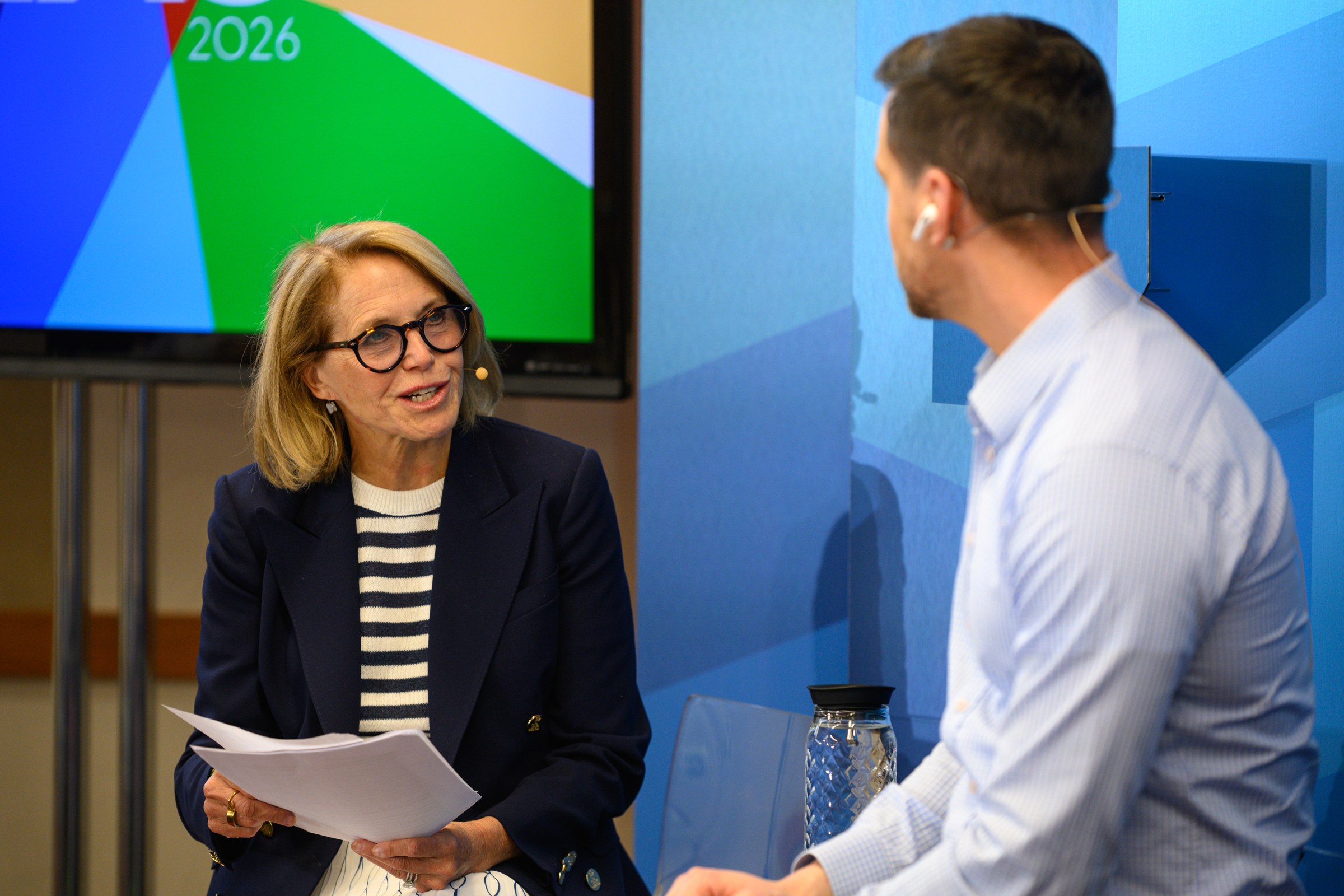
2400x1600 · 457 KB
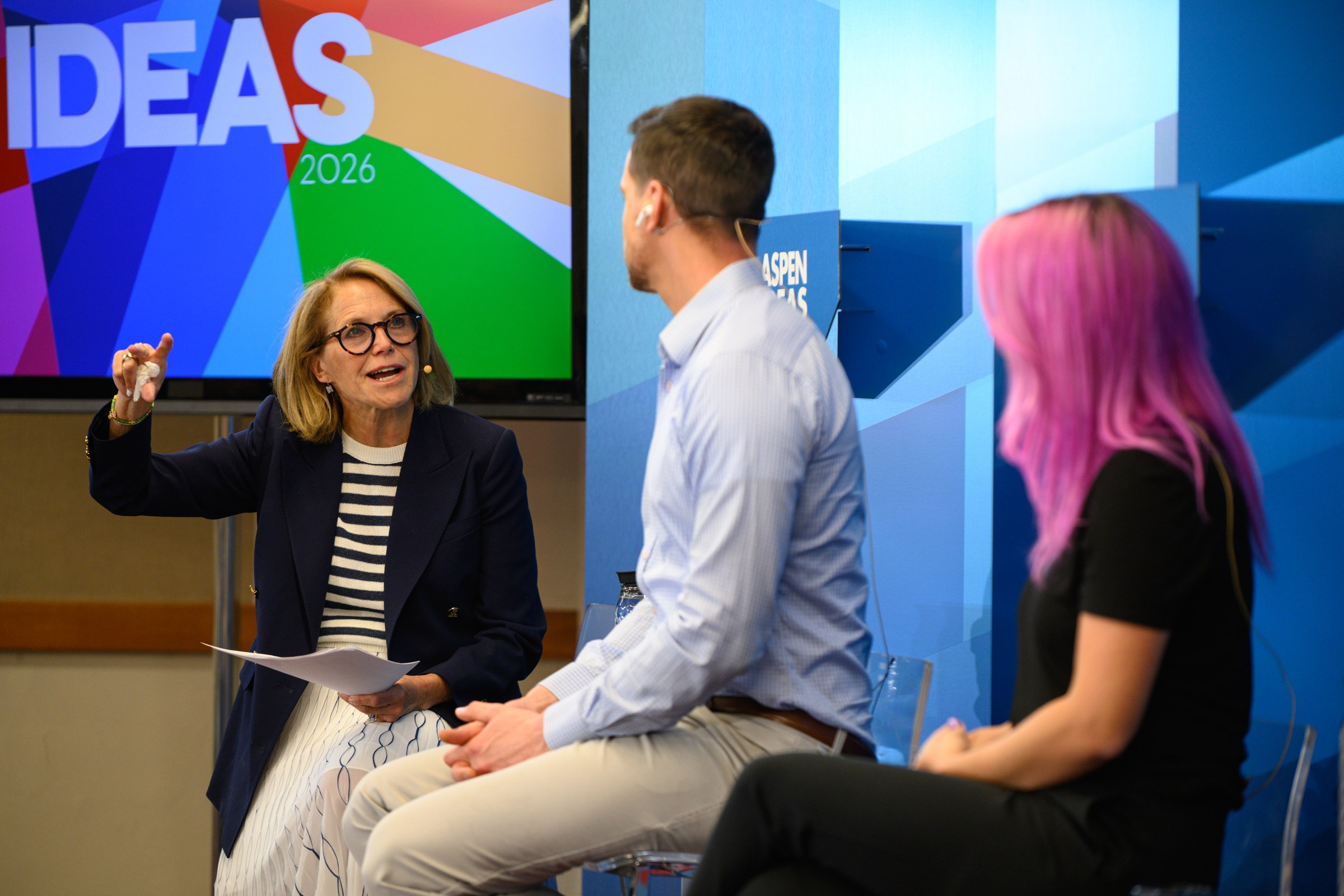
2400x1600 · 434 KB
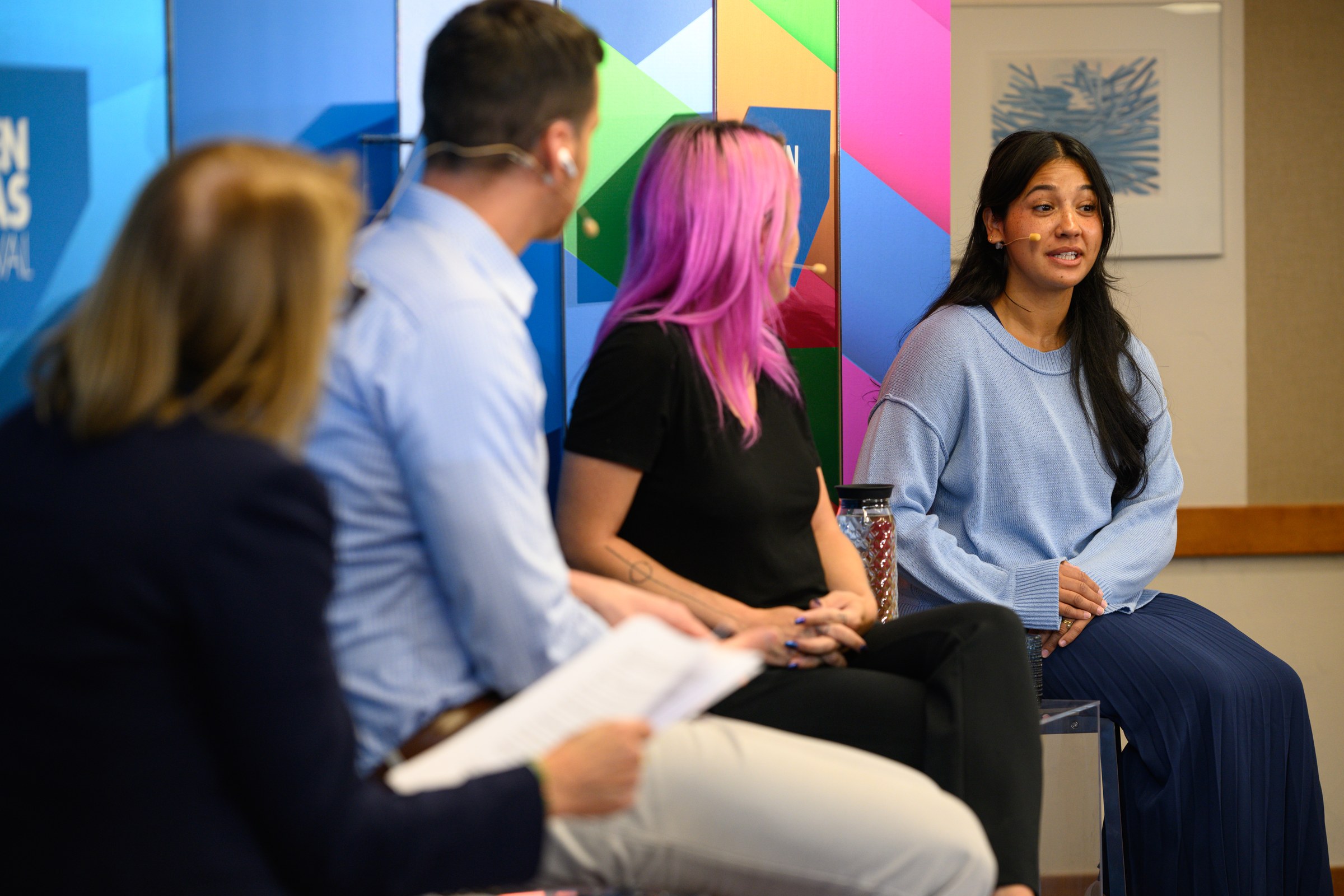
2400x1600 · 457 KB
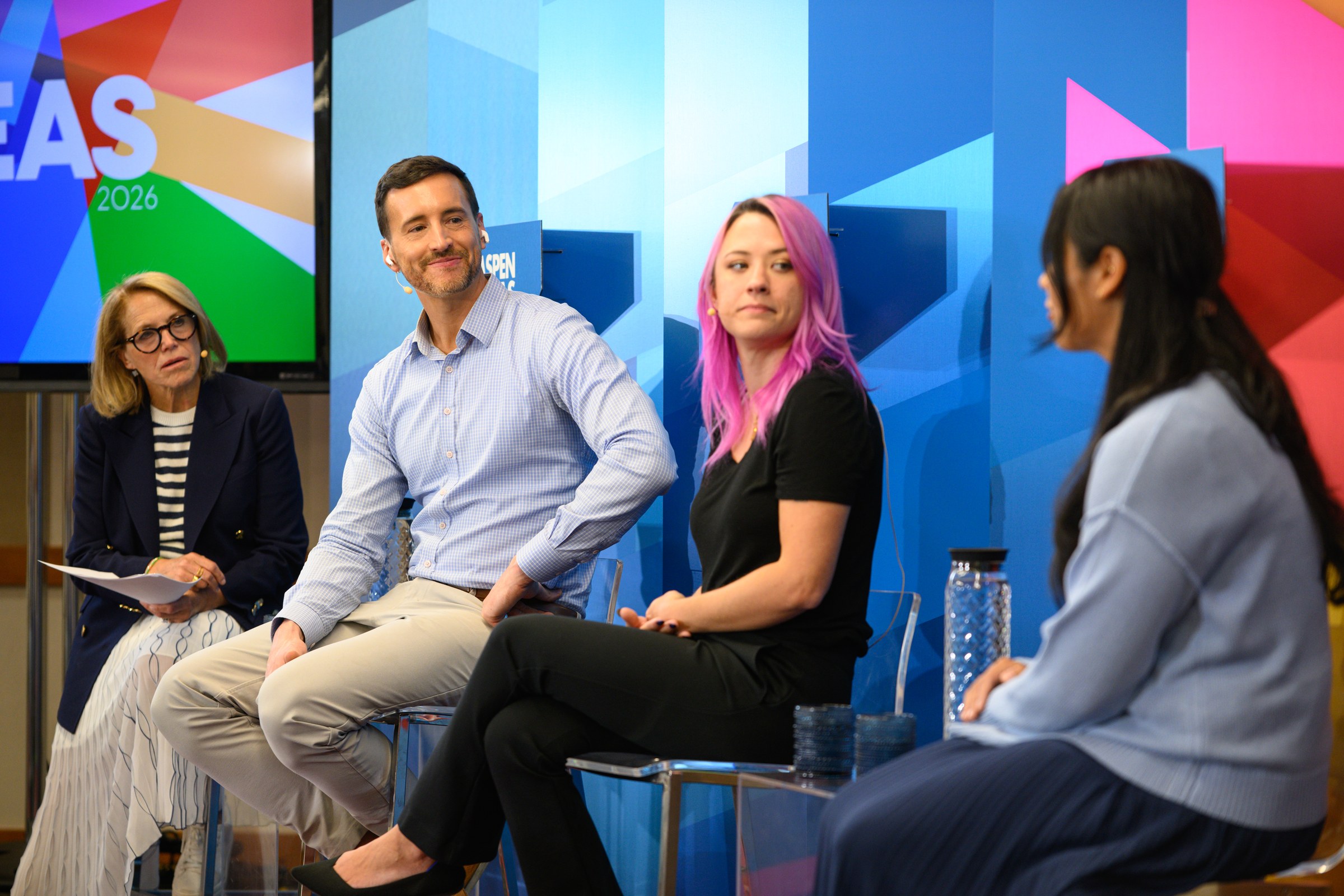
2400x1600 · 535 KB
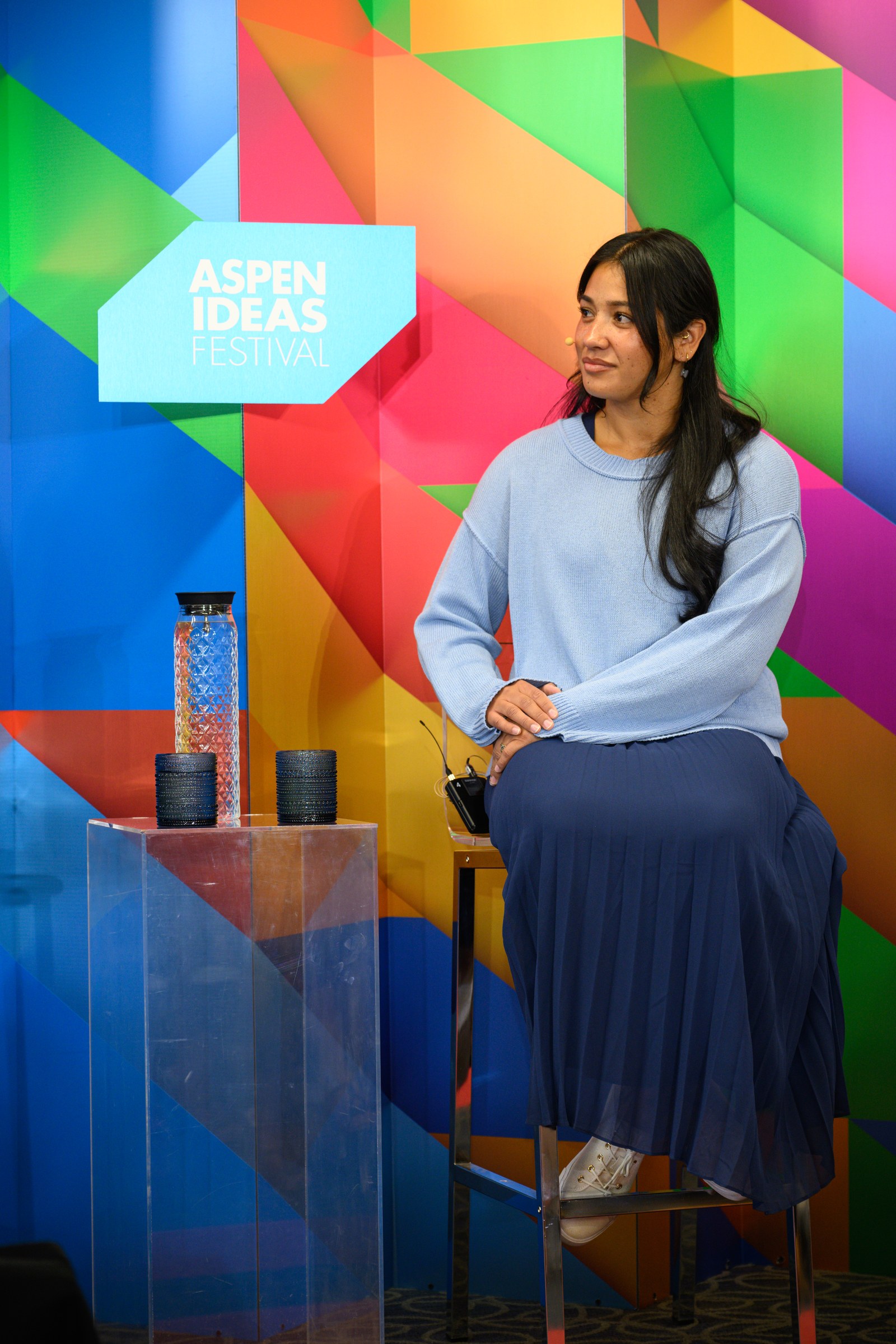
1600x2400 · 558 KB
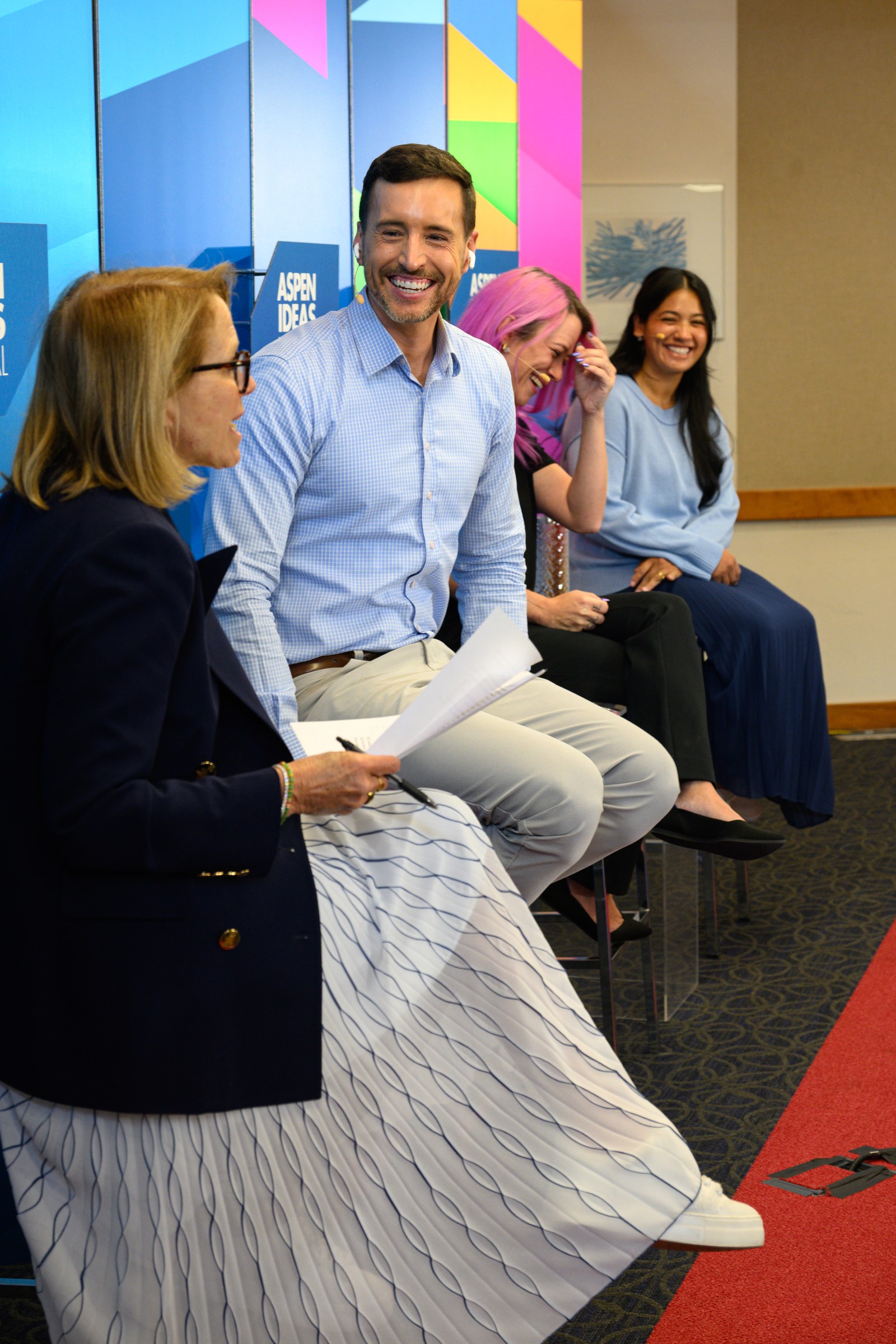
1600x2400 · 587 KB
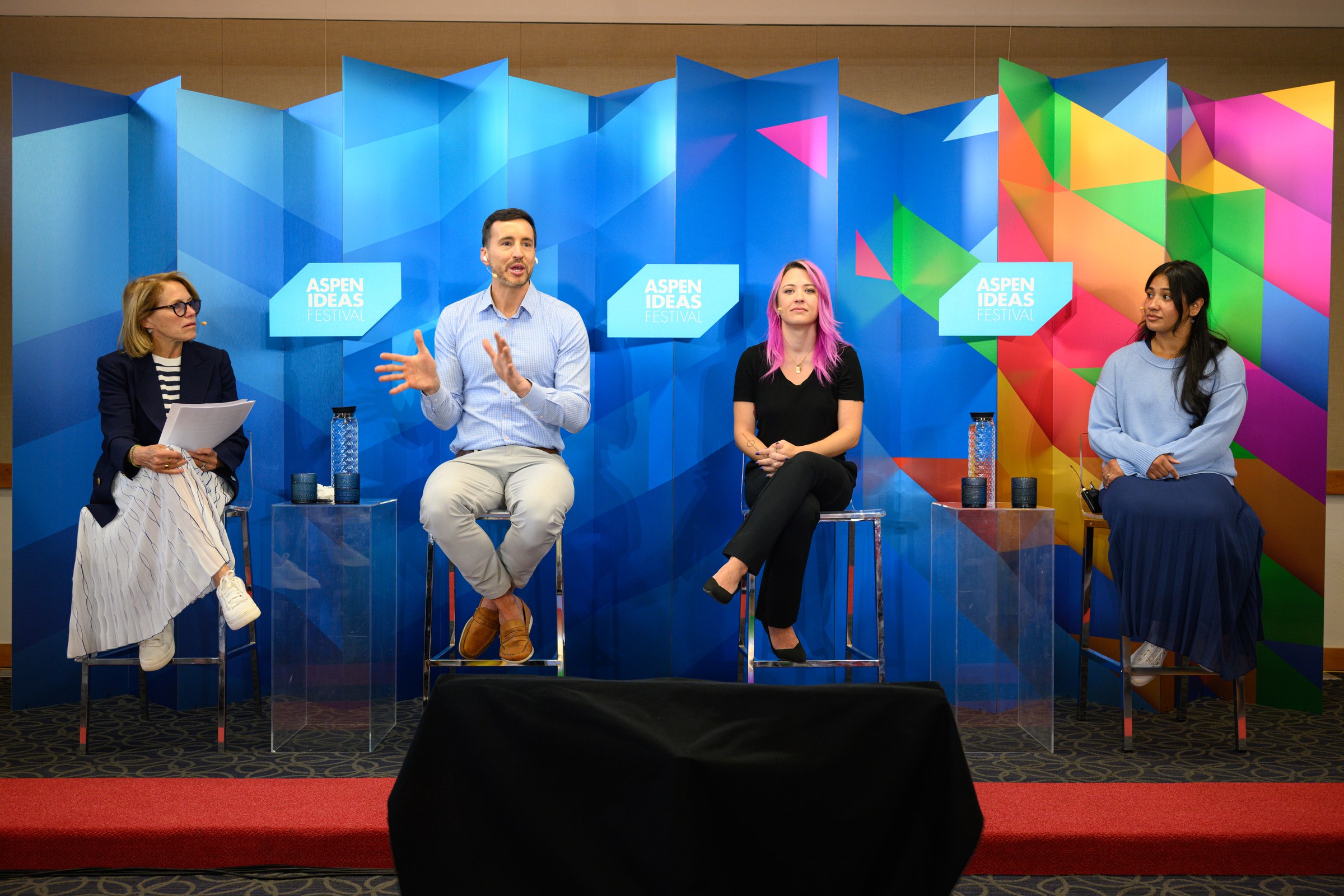
2400x1600 · 615 KB
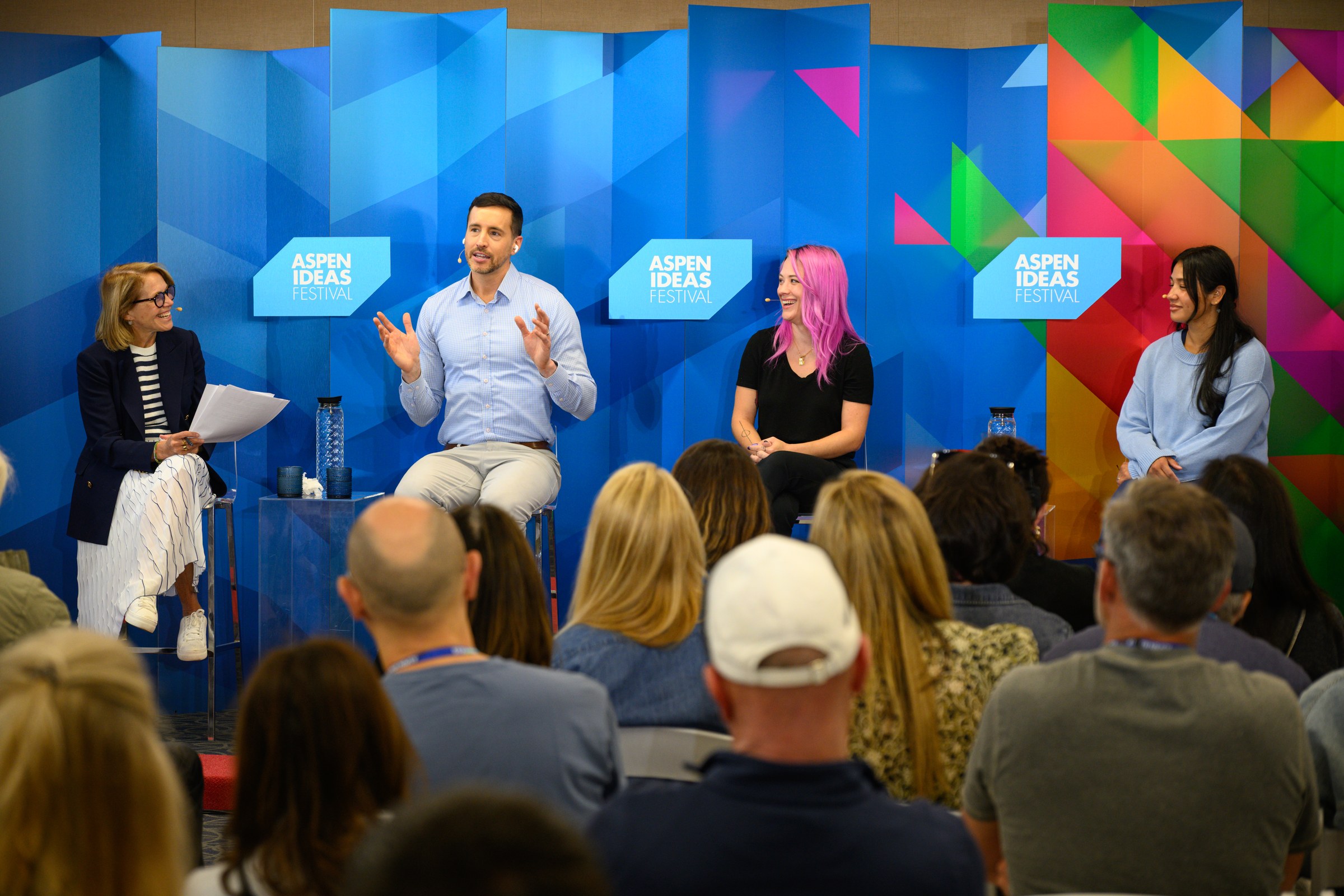
2400x1600 · 541 KB
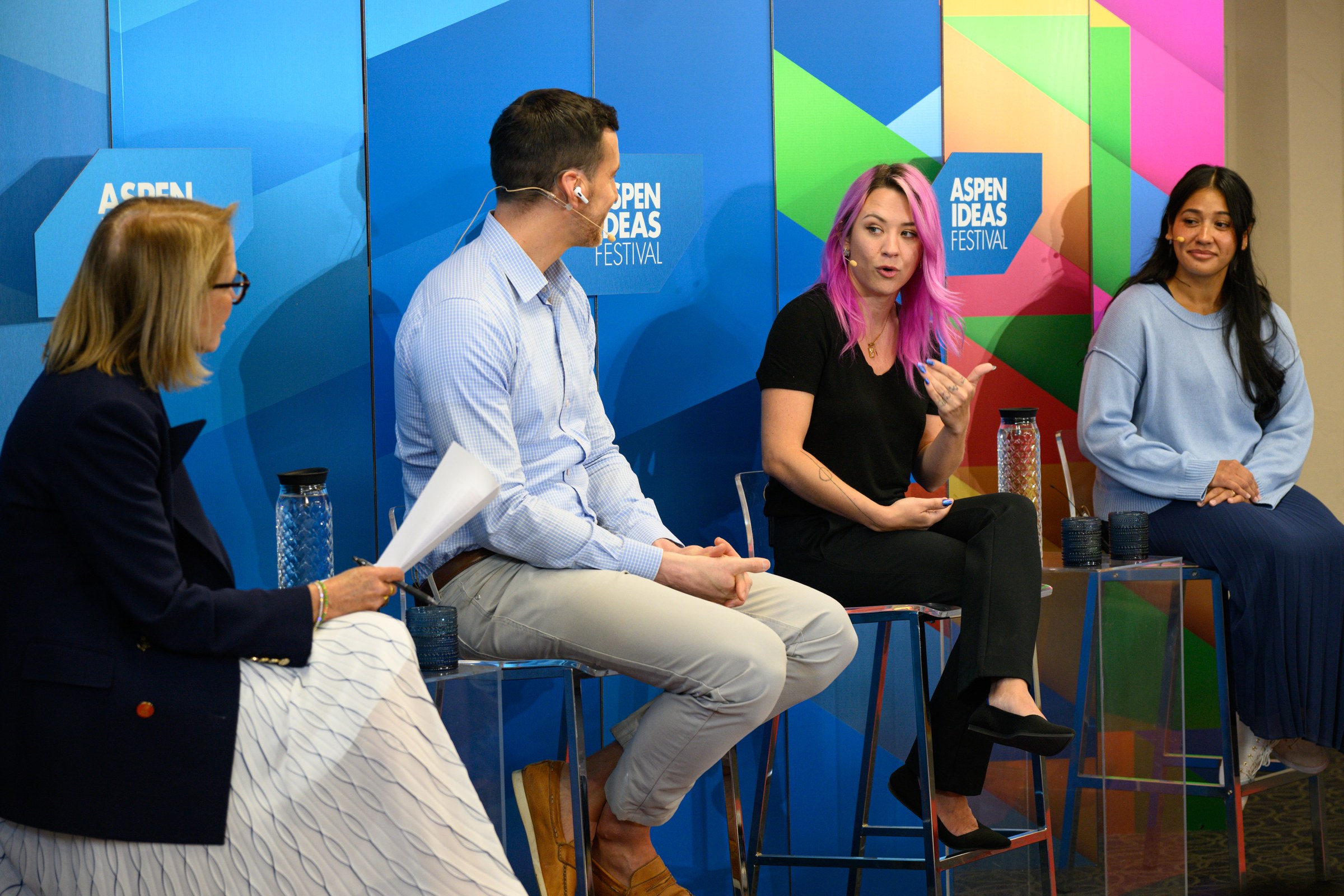
2400x1600 · 604 KB
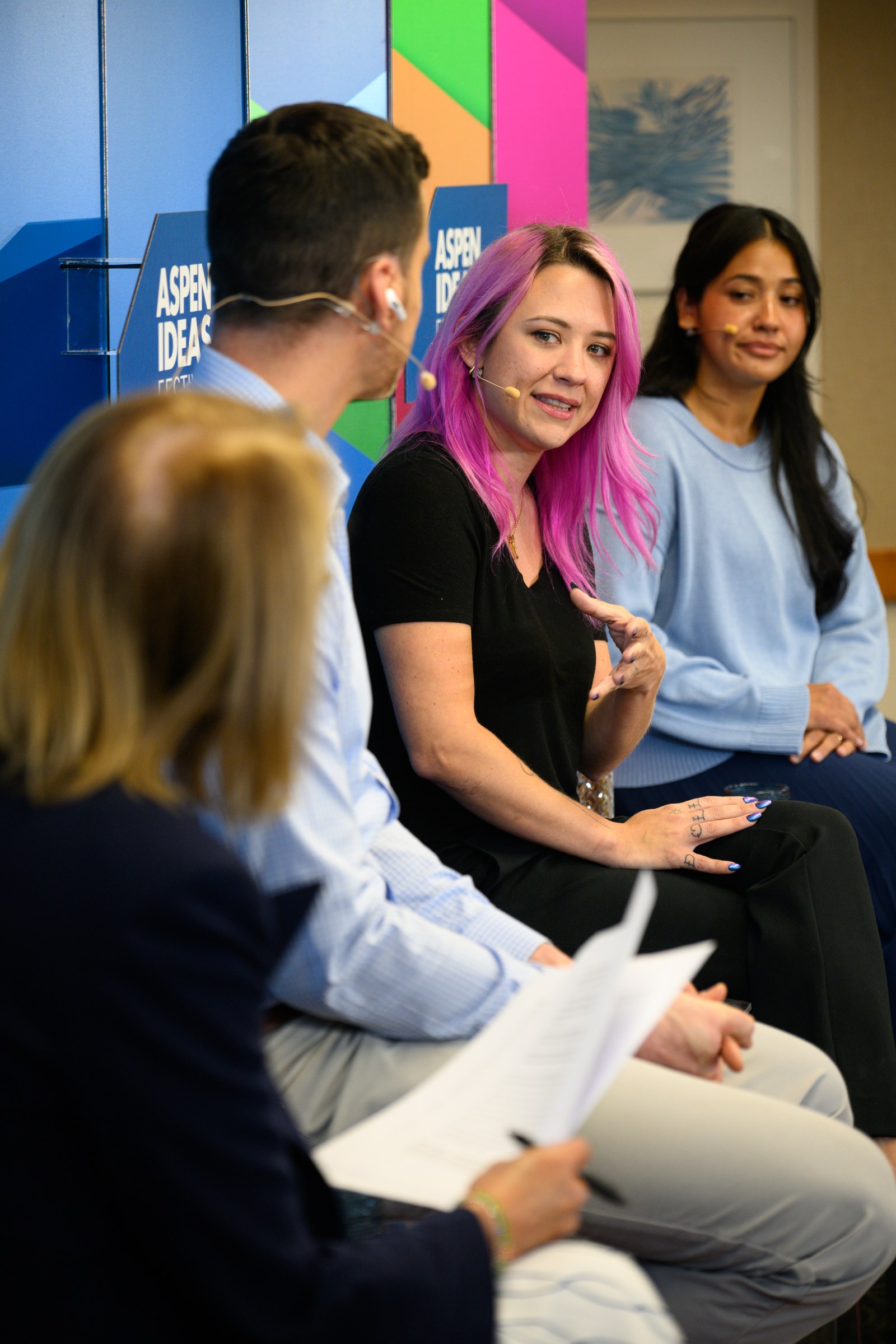
1600x2400 · 449 KB
Frames from the recording, upscaled to 4K
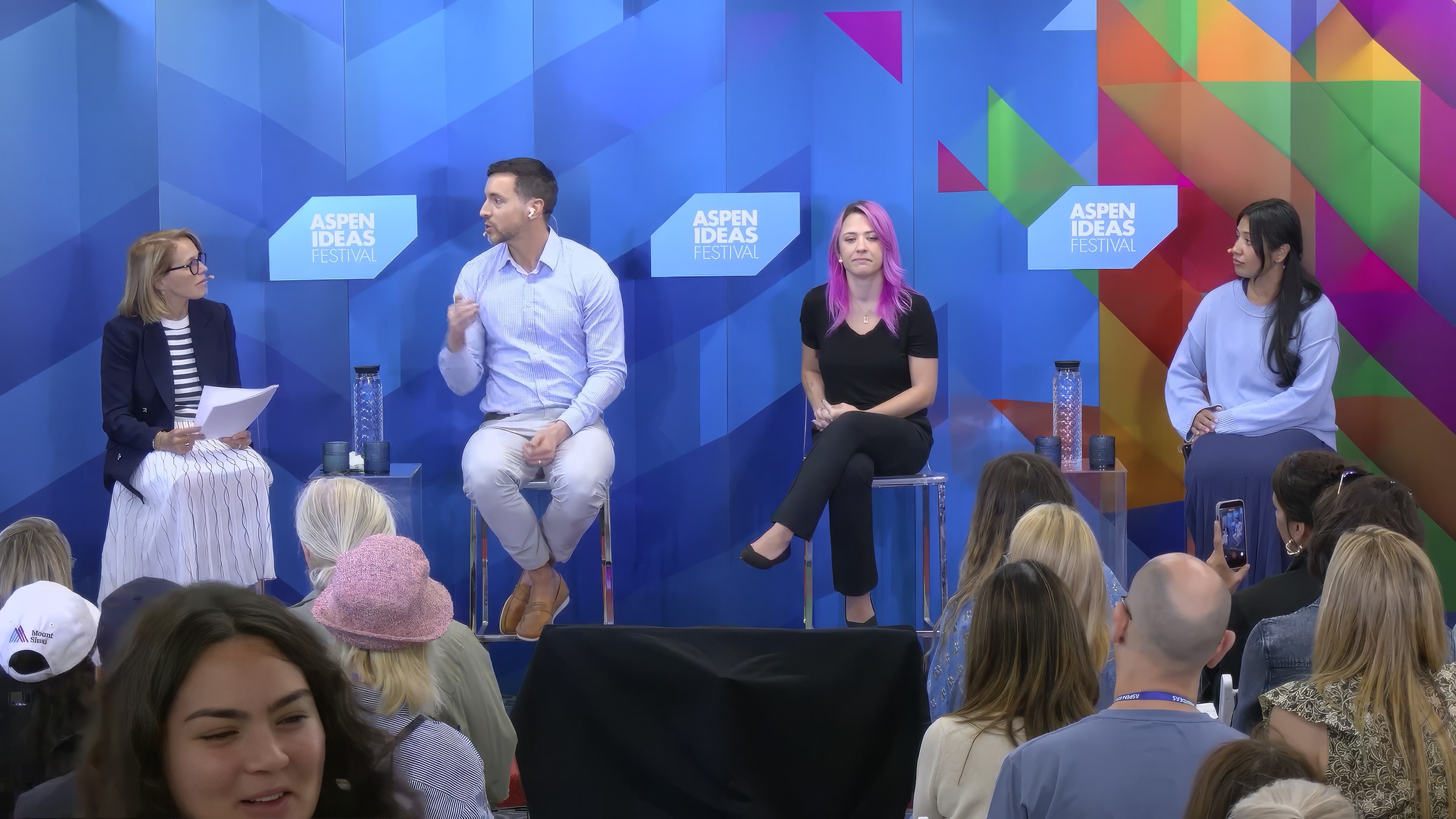
2400x1350 · 430 KB
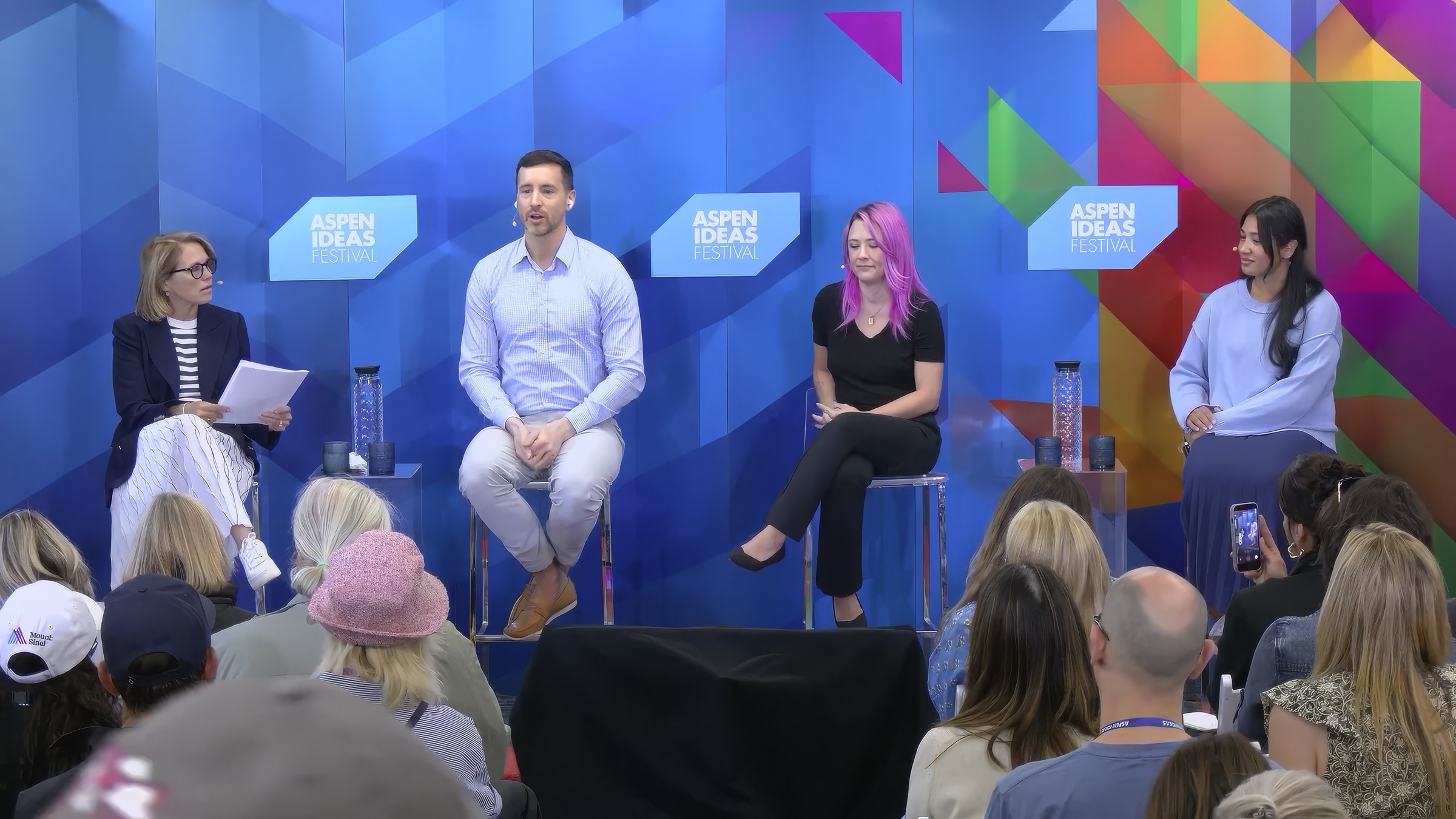
2400x1350 · 430 KB
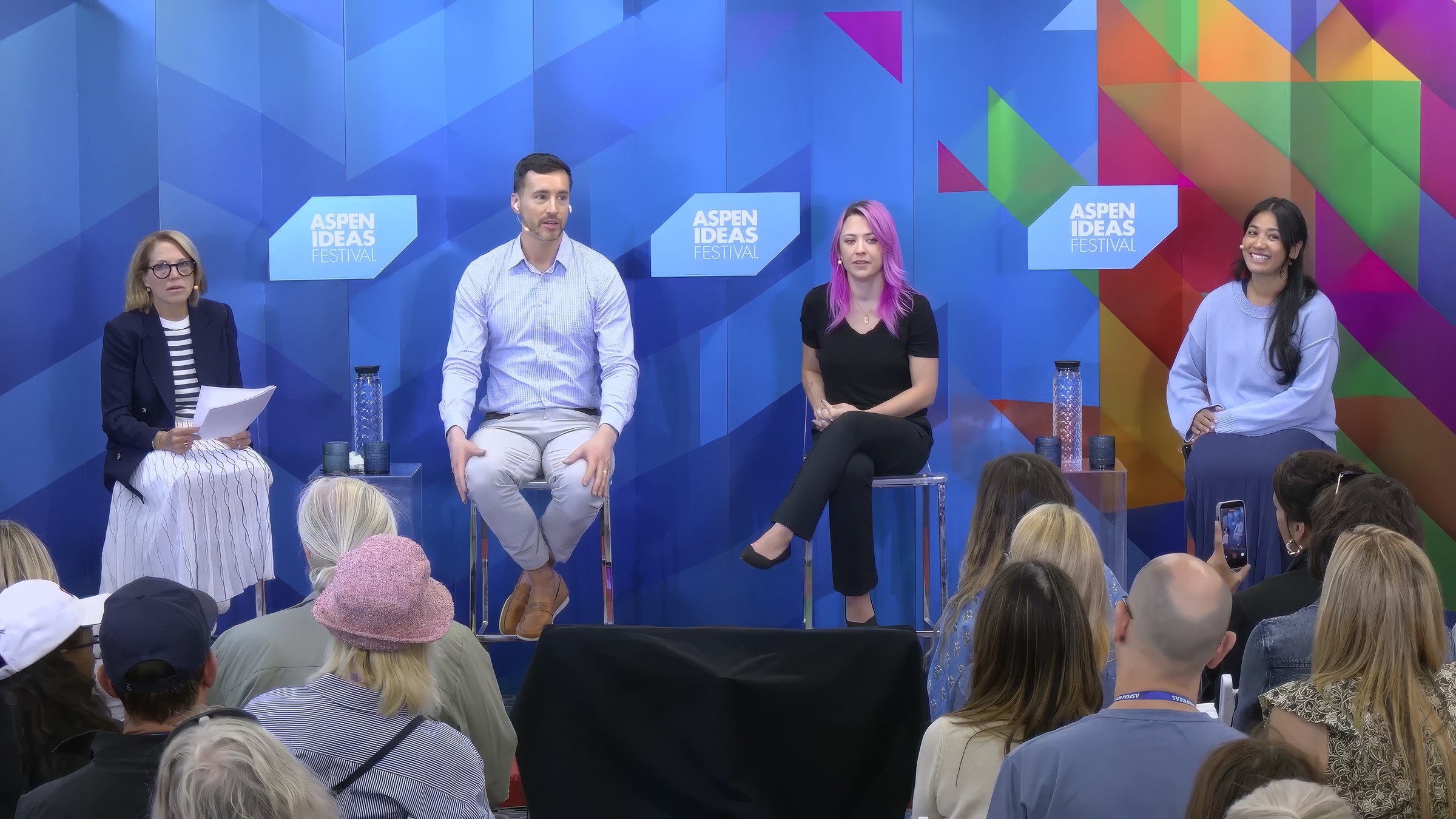
2400x1350 · 457 KB
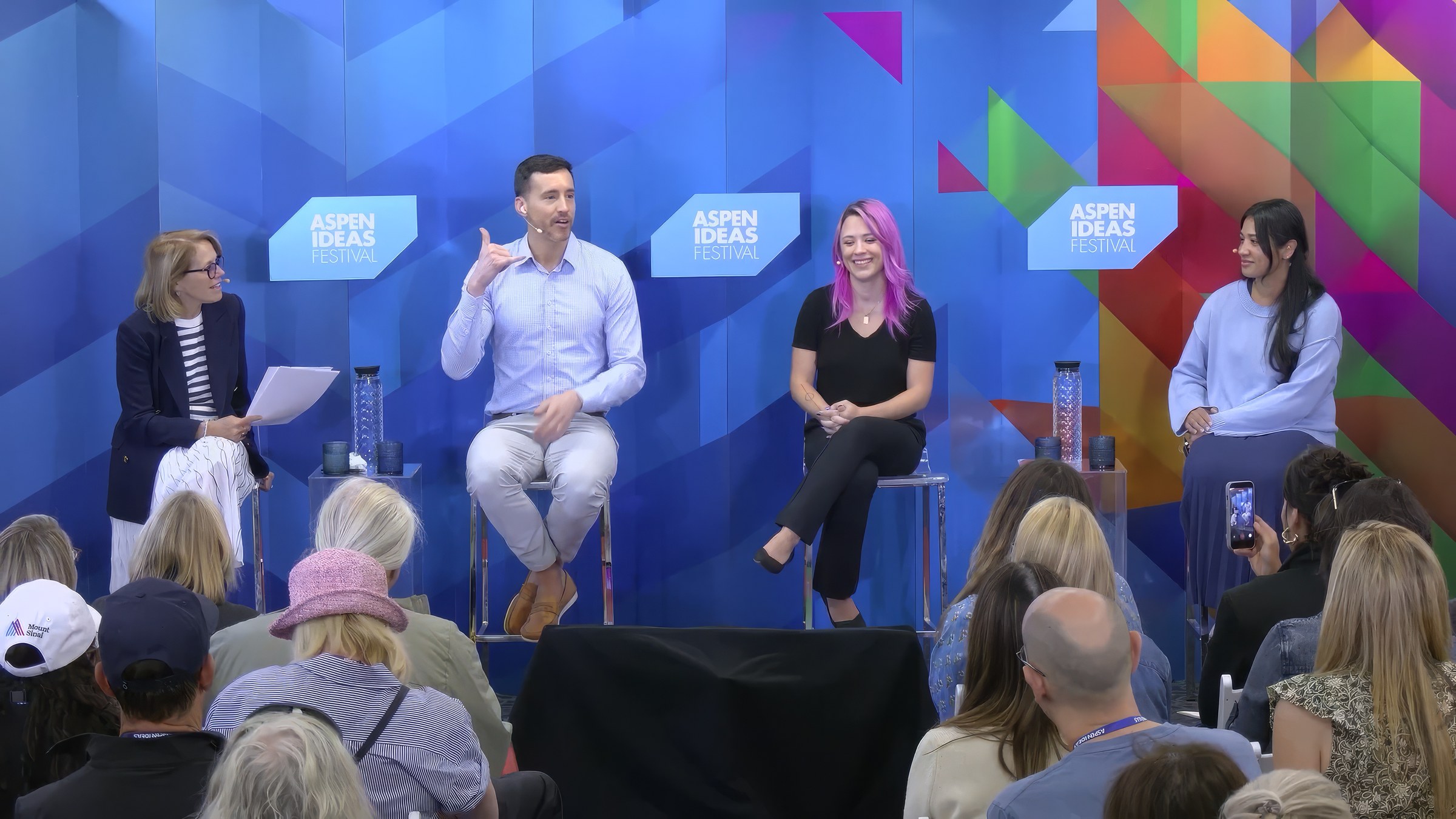
2400x1350 · 442 KB
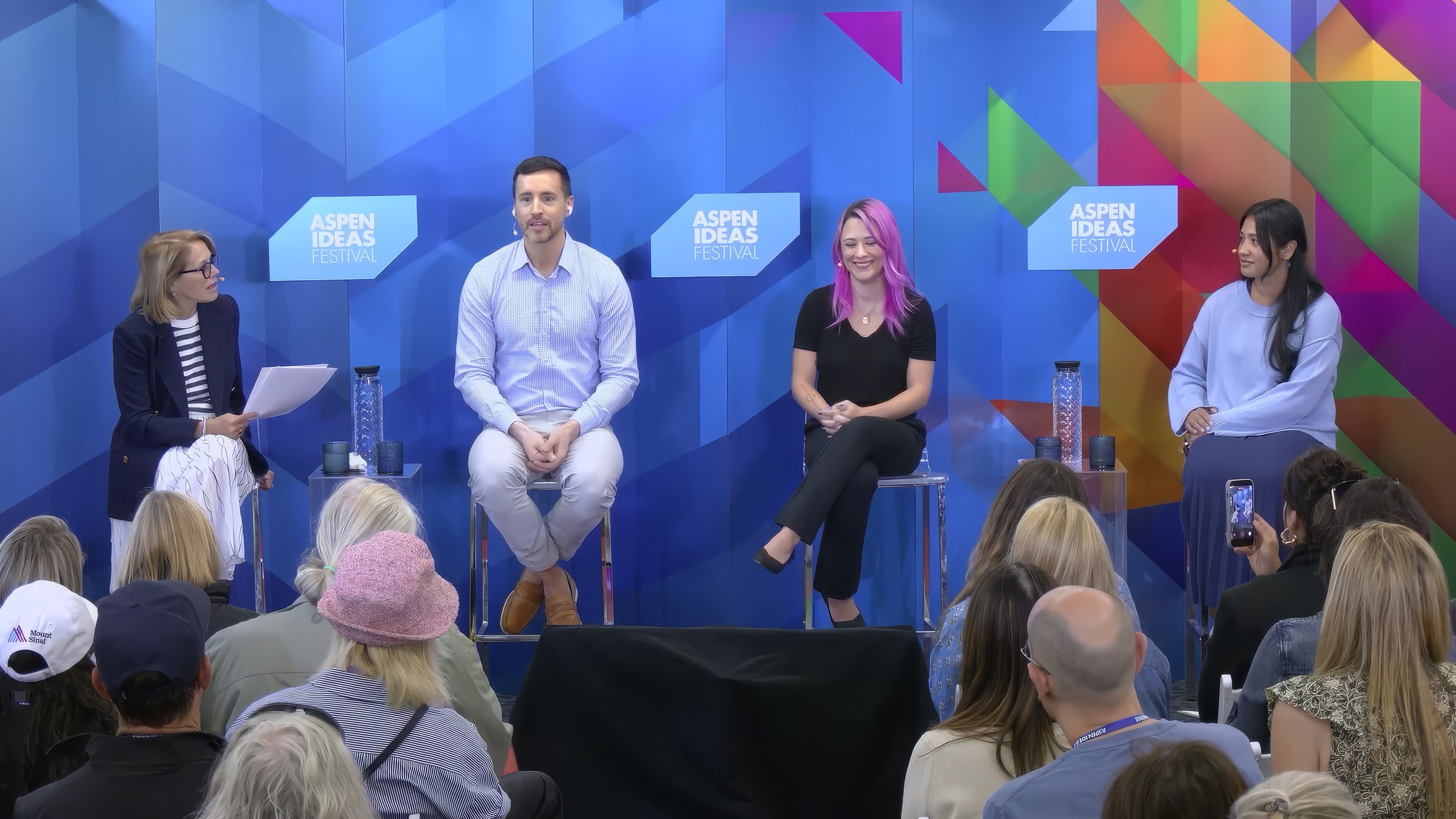
2400x1350 · 450 KB
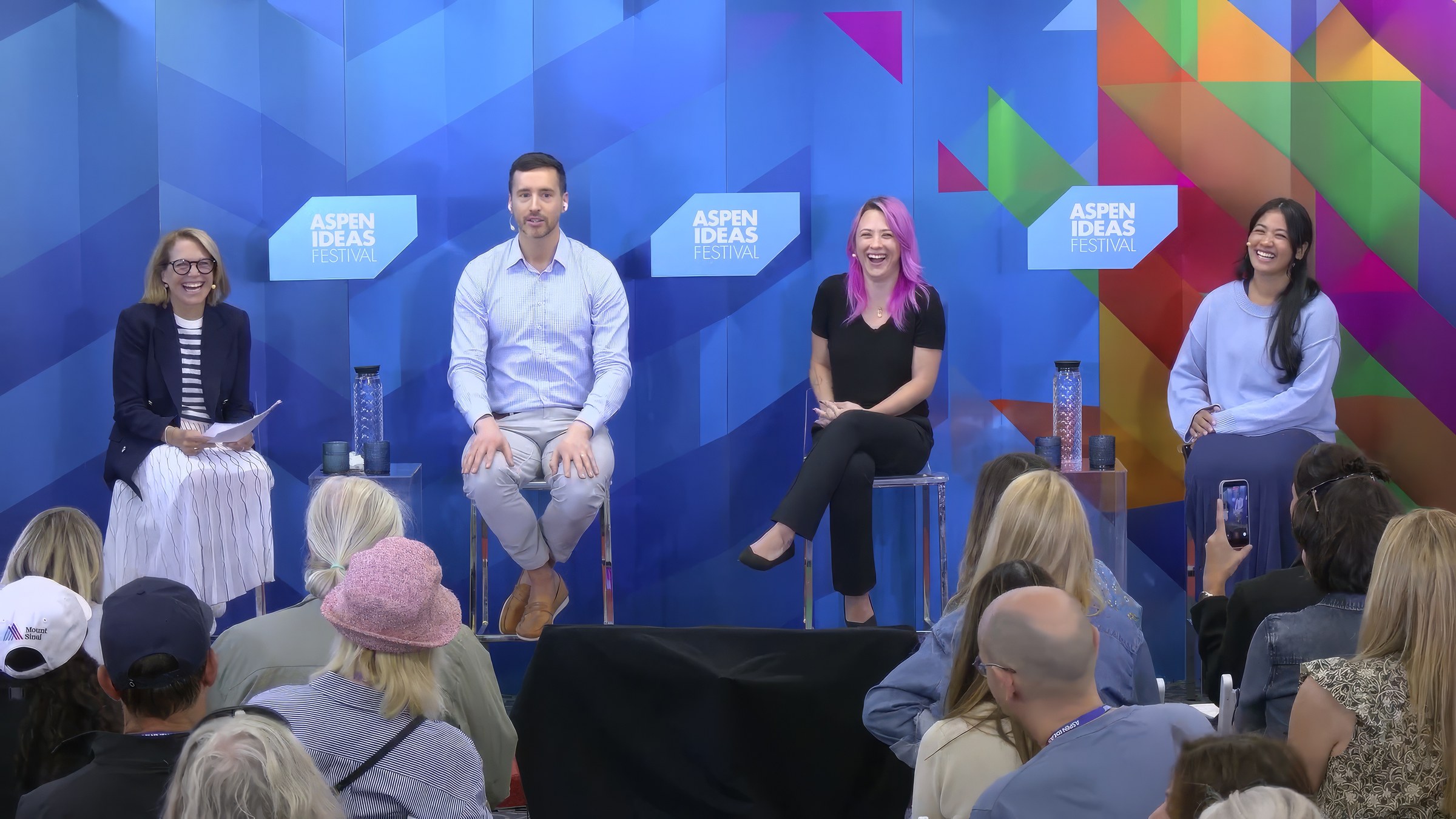
2400x1350 · 443 KB
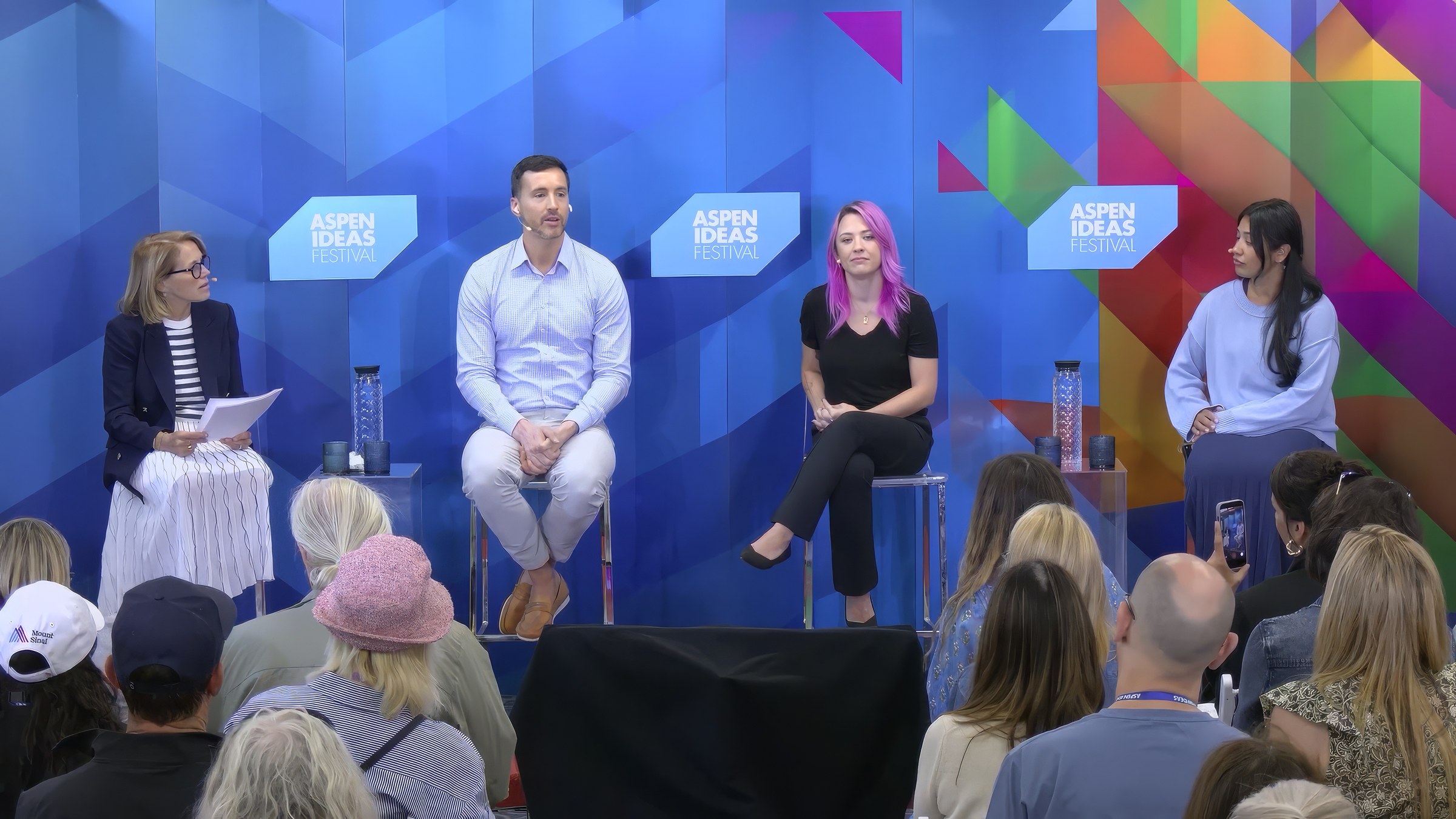
2400x1350 · 457 KB
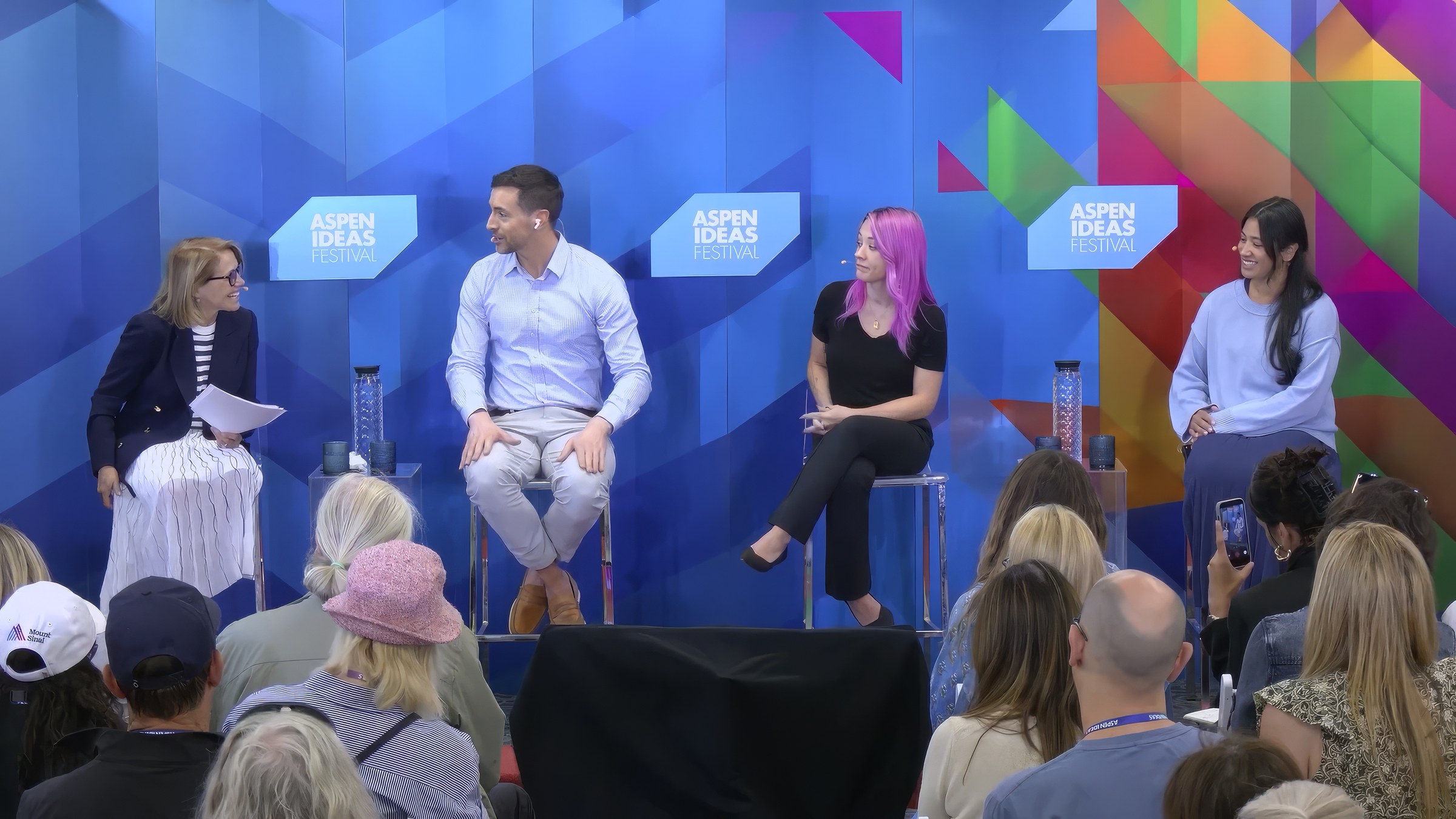
2400x1350 · 440 KB
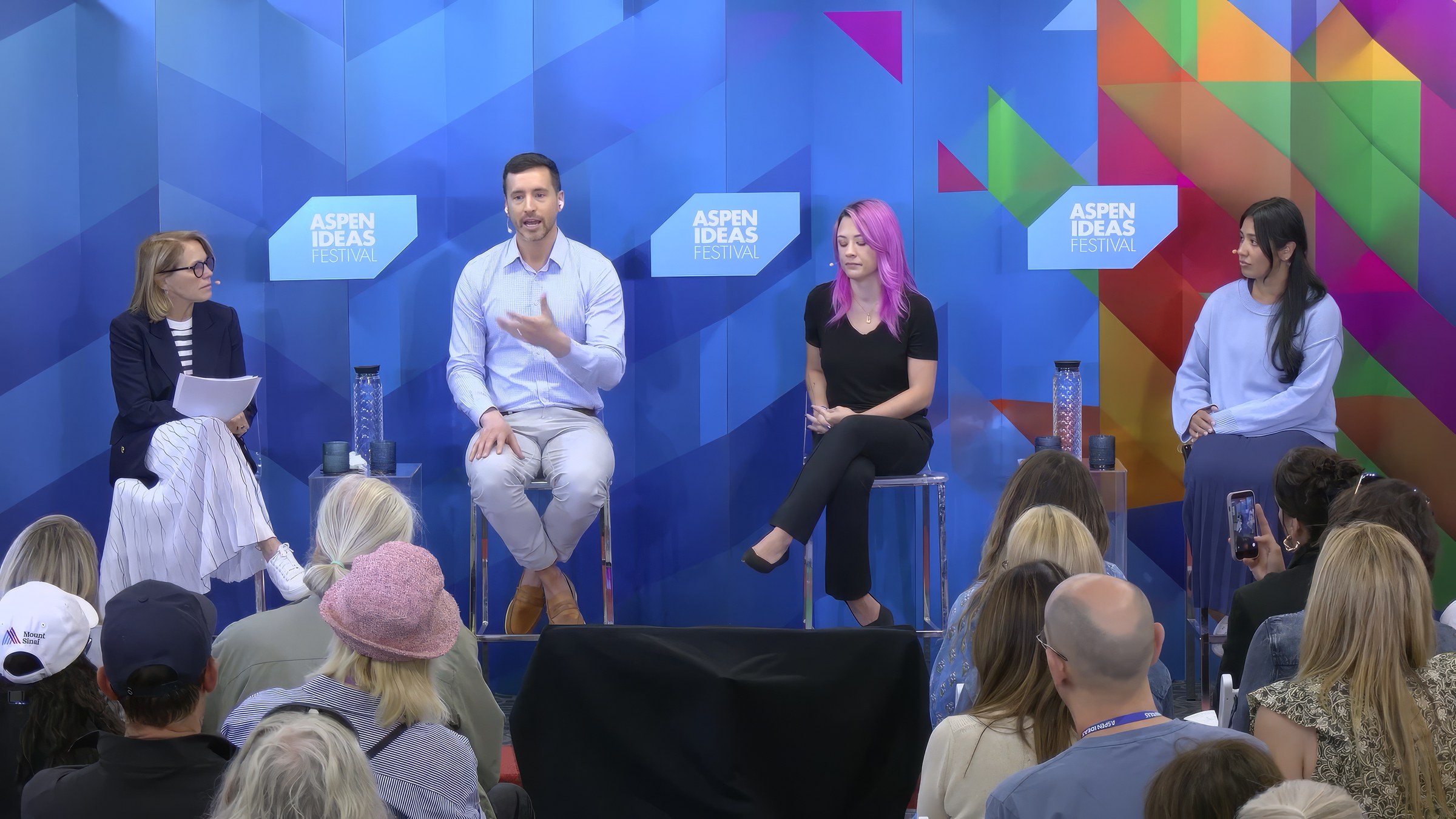
2400x1350 · 453 KB
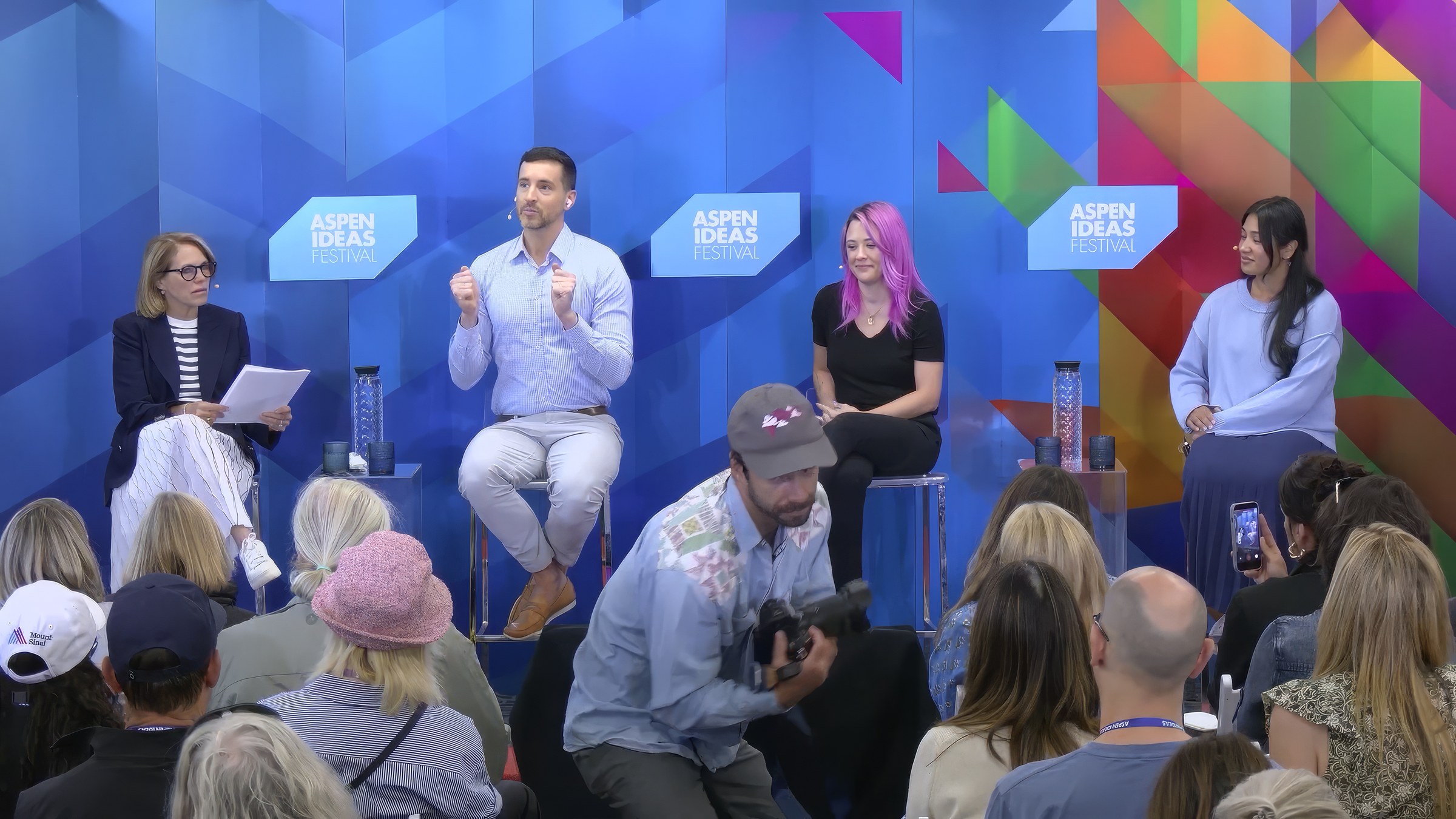
2400x1350 · 484 KB
The full panel is public on the Aspen Institute's channel: Who Gets to Move Up When AI Changes the Rules of Work?. Every video here is cut from that recording, nothing is re-staged, and every quote on a still is verbatim.